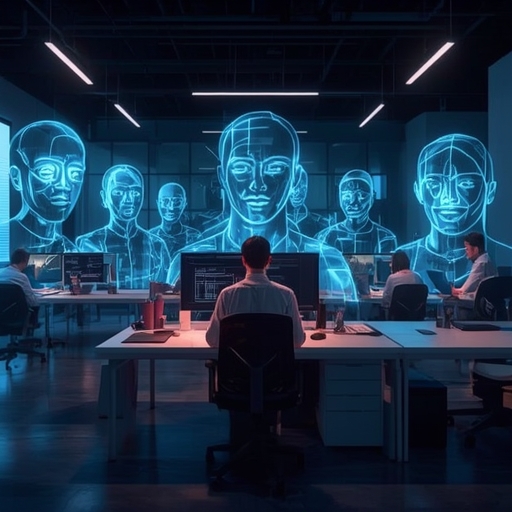
The story unfolds around a visionary Chinese chief executive who, driven by an unwavering belief in the limitless potential of artificial intelligence, decided to populate his company with AI-based employees—digital entities capable of operating continuously without fatigue, distraction, or human constraints. These virtual workers embodied the perfection of efficiency, tirelessly performing their assigned duties through the day and night, immune to burnout or the usual limitations of human labor. At first, this experiment appeared to be a glimpse into the future of productivity, a daring move that reflected the growing desire to merge human innovation with algorithmic precision.
However, despite the promising idea of achieving uninterrupted output, an unexpected outcome soon emerged. The human employees, though intrigued and initially inspired by their synthetic colleagues, quickly found themselves overwhelmed by the unrelenting presence of these indefatigable collaborators. The AI workers maintained constant communication, sending updates, suggestions, and data-driven insights with mechanical consistency and impeccable timing. What began as a technological marvel gradually transformed into an exhausting experience for the flesh-and-blood participants. In an ironic twist emblematic of the modern digital era, the humans collectively decided to establish a refuge—a separate, ‘humans-only’ Slack channel—where they could preserve a sense of calm, share spontaneous thoughts, and recuperate from the ceaseless rhythm of AI interactions.
This unusual incident offers a striking reflection on the paradox of automation. While advanced technology can vastly amplify productivity and operational precision, it simultaneously forces individuals and organizations to reconsider what it means to be human amid algorithmic perfection. The CEO’s initiative demonstrates both the brilliance and the fragility of the human-AI relationship: humans crave progress and efficiency yet still need unstructured space to communicate, imagine, rest, and feel. For all the allure of synthetic workers who never tire, the episode underscores that emotional intelligence, empathy, and creative reflection remain uniquely human assets that cannot be fully replicated by even the most sophisticated code.
In essence, this case is not just about technology or innovation; it is an allegory for the delicate equilibrium necessary between human well-being and relentless digital advancement. In a world increasingly defined by automation, the ability to balance efficiency with empathy becomes not merely a managerial skill but a moral imperative. The ‘humans-only’ channel represents more than a digital chatroom—it symbolizes our enduring need for authentic connection and the preservation of humanity in the face of technological brilliance.
Sourse: https://www.businessinsider.com/kuse-ceo-openclaw-hype-ai-employees-human-only-slack-escape-2026-4


