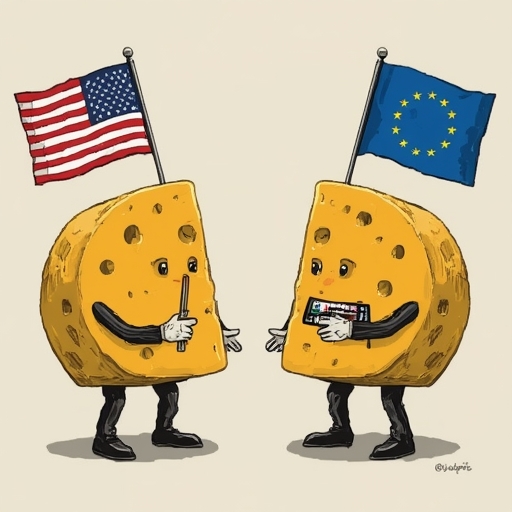
A seemingly simple question about cheese names has evolved into a complex and diplomatically charged transatlantic dispute that reaches far beyond the dairy aisle. The United States is vigorously advocating for its cheese producers to be permitted to label and market their products using long-established European designations such as “feta” and “parmesan.” What might outwardly appear to be a minor semantic issue in fact represents a profound disagreement over intellectual property, cultural heritage, and the principles that govern international trade.
For American producers, the argument centers on flexibility, economic opportunity, and the belief that centuries-old European names have entered the public domain of global commerce. They maintain that restricting the use of these identifiers unfairly limits competition and places U.S. producers at a disadvantage in international markets where consumers recognize and trust names like feta or parmesan as descriptors of flavor and style rather than strict geographic indicators. From this perspective, opening access to these terms would democratize trade language, enhance market fairness, and reflect the globalized nature of contemporary food production.
On the European side, however, the stance is equally firm but grounded in cultural preservation and authenticity. The European Union asserts that names such as “feta” and “parmesan” are not generic labels but rather regionally protected designations tied to specific landscapes, climates, and production methods that have been refined through centuries of tradition. Allowing non-European producers to appropriate these names, Europe argues, would dilute the value of its heritage products and mislead consumers about their origins and qualities. Geographic indication protections, in the EU’s view, safeguard not only market integrity but also the identity and livelihood of rural communities that depend on these artisanal practices.
This “Feta Fight,” as it has been playfully dubbed by media outlets, thus encapsulates a deeper philosophical clash over what globalization should look like in the 21st century. Is the universal sharing of well-known names a natural evolution of trade freedom, or does it pose a threat to the authenticity of cultural craftsmanship? The issue sits at the intersection of law, branding, geography, and national pride, with both sides wielding persuasive economic and ethical arguments. As negotiations continue, the world watches a debate that proves—quite literally—that even something as humble as cheese can become a potent symbol of identity, sovereignty, and the delicate balance between tradition and modernity in global commerce.
Sourse: https://www.wsj.com/world/europe/feta-cheese-us-european-trade-7f7a5038?mod=pls_whats_news_us_business_f


