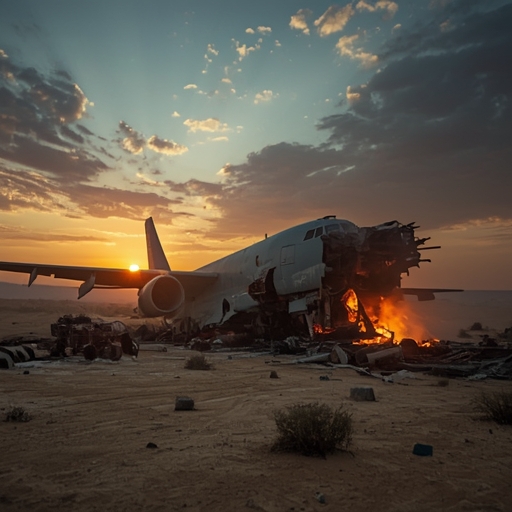
In a development that underscores both the sophistication of modern warfare and the extremes to which military forces will go to safeguard critical national interests, multiple defense reports have revealed that United States forces deliberately destroyed their own downed aircraft in Iran following the successful recovery of a stranded F-15E airman. This decisive act, though extraordinary, was driven by the imperative to prevent highly sensitive military technologies—systems containing classified avionics, targeting mechanisms, and encrypted communication arrays—from falling into foreign or adversarial possession.
According to the available details, the incident unfolded after an emergency landing that left a U.S. Air Force pilot isolated within a geopolitically volatile region. Once a specialized extraction team executed a complex recovery of the airman, military command swiftly ordered that the compromised aircraft be neutralized to eliminate any potential intelligence vulnerability. Such actions, while seemingly drastic, reflect long-standing defense protocols designed to preserve technological superiority and protect national security assets.
This operation illustrates the extraordinary measures defense forces employ to maintain strategic control in global theaters where even a single piece of advanced equipment could reveal valuable insights about weapon systems, radar countermeasures, or tactical capacities. The destruction of one’s own technology underlines a calculated balance between material loss and the assurance that no sensitive information can be reverse-engineered for hostile use. Historical precedents exist for similar self-destructive measures—each highlighting the often unseen layers of risk assessment underlying international military conduct.
Beyond its immediate tactical implications, the decision also reveals the complex moral and logistical challenges inherent in contemporary defense operations. It demonstrates the unyielding commitment of armed forces to operate according to doctrines that prioritize national security over asset preservation. The incident has sparked conversation among defense analysts, who note that such extreme precautions are a testament to both the advanced nature of modern aircraft and the far-reaching consequences of technological compromise in an era defined by surveillance, cyber capabilities, and cross-border espionage.
Ultimately, this episode serves as a reminder that in the evolving theater of military engagement, the protection of classified innovation is as vital as the safeguarding of human life. Every action—from rescue to destruction—was executed in alignment with a broader strategic mandate: to ensure that the nation’s technological edge, painstakingly built through years of research and intelligence, remains firmly out of reach from those who might seek to exploit it.
Sourse: https://www.businessinsider.com/photos-destroyed-us-aircraft-c130-mh6-iran-war-f15-rescue-2026-4


