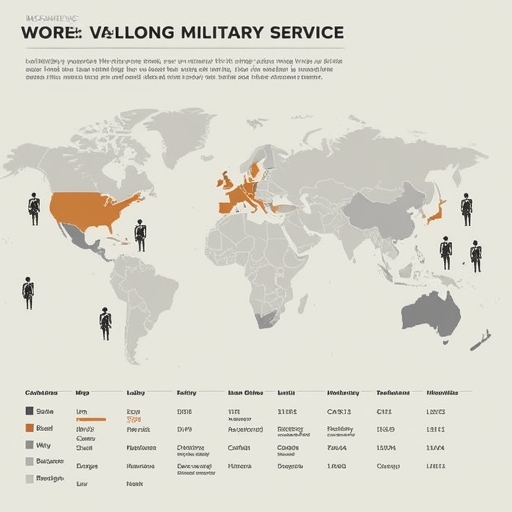
Compulsory military service continues to be one of the most defining civic responsibilities in numerous nations across the globe, a practice that not only underscores national security concerns but also reflects deep-rooted cultural and political traditions. As of 2026, many countries still maintain strict conscription systems, requiring citizens—most often young men—to dedicate significant portions of their early adulthood to state service. In several regions, the duration of such service extends well beyond a single year, reaching up to twenty-four months or even longer, depending on the specific military, geopolitical, or demographic needs of the nation.
Examining these extended service obligations offers an illuminating window into a country’s strategic priorities. Nations that sit at the intersection of fragile borders, historical conflict zones, or regional rivalries tend to impose longer and more comprehensive service requirements. This approach is seen not merely as a utilitarian measure for national defense, but as a formative social institution designed to foster unity, discipline, and a sense of shared national purpose. Conversely, countries with shorter or more flexible terms often reflect different domestic philosophies—those emphasizing individual autonomy, technological defense systems, or volunteer-based armies over traditional mass mobilization.
From a global perspective, the length of conscription serves as an indirect indicator of how societies balance the obligations of citizenship with personal freedom. Mandatory service periods that approach two years frequently coincide with governments that place a profound emphasis on collective duty and readiness in the face of geopolitical uncertainty. For instance, certain European, Middle Eastern, and Asian countries preserve two-year terms owing to their strategic positioning, historical legacies, and ideological frameworks that bind military preparedness tightly to civic identity.
Beyond defense, extended national service plays a broader socio-economic role. It shapes workforce dynamics, influences education paths, and profoundly impacts youth culture and gender norms—especially in countries where equality in conscription is actively being debated or gradually adopted. In this context, the persistence of long mandatory service durations becomes a lens through which we can read the ongoing dialogue between tradition and modernization in both military doctrine and civic consciousness.
This comprehensive analysis highlights the twenty-four countries that, as of 2026, require their citizens to serve the longest terms. Together, they represent contrasting political systems, economies, and national narratives, yet all converge in their conviction that military service remains an indispensable component of national identity and security. Through this comparison, one gains not merely a statistical understanding of service length, but a richer appreciation of the values, fears, and aspirations that sustain these enduring institutions of duty and defense.
Sourse: https://www.businessinsider.com/countries-longest-military-service-requirements


