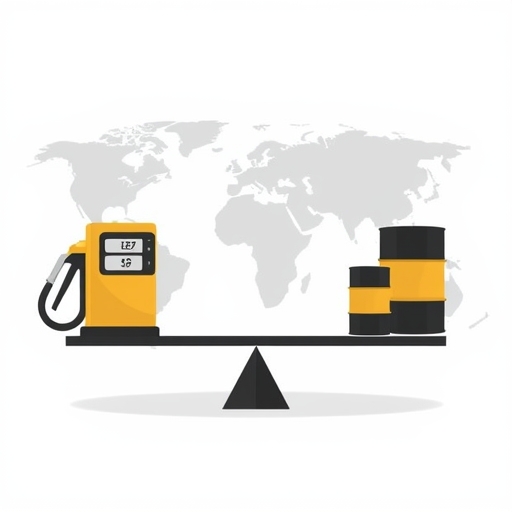
Although recent developments such as the ceasefire have provided a measure of stability and reduced the heightened volatility observed in global oil markets, it would be premature to expect the effects of this shift to translate into immediate savings for the everyday consumer. The retail fuel market, with its intricate network of production, transportation, and distribution, does not adjust prices instantaneously to changes in futures trading or global benchmarks. Instead, pricing reflects a delayed response — a carefully staggered process influenced by existing inventories, contractual supply agreements, and transportation lead times.
For instance, even as crude oil futures experience a noticeable dip following positive geopolitical events, the gasoline already in circulation — whether stored in refineries, distributed through pipelines, or positioned at retail outlets — was purchased or refined at previous, often higher, market rates. This time lag between market movements and consumer pricing is a fundamental feature of energy economics and underscores the complex relationship between macroeconomic developments and household expenses.
Moreover, the psychology of market participants and logistical considerations often compound this delay. Refiners, distributors, and retailers are cautious in modifying prices downward too quickly, ensuring that inventory costs are appropriately recovered before reflecting new rate adjustments. Conversely, when upward pressure in oil prices occurs, increases tend to be implemented more swiftly, as sellers attempt to hedge against potential future costs.
Understanding this asymmetry — the slow decline but rapid rise of fuel prices — offers valuable perspective for both consumers and policymakers. It highlights that while energy markets react instantaneously to news events and trading signals, the tangible benefits or burdens are filtered through multiple economic layers before reaching end users. In practical terms, this means that the easing of global tensions and a subsequent softening of oil futures are positive indicators for long-term market equilibrium, even if immediate relief at the pump remains elusive.
Ultimately, patience and contextual awareness are key. The interconnected nature of global supply chains ensures that today’s encouraging news stories are harbingers of future improvement rather than instant change. For those tracking economic resilience, cost-of-living shifts, or industrial performance, recognizing these inherent lags in the energy pricing mechanism fosters a more realistic understanding of how macro trends shape daily life and financial planning.
Sourse: https://www.businessinsider.com/trump-iran-ceasefire-energy-gas-price-wti-crude-supply-hormuzs-2026-4


