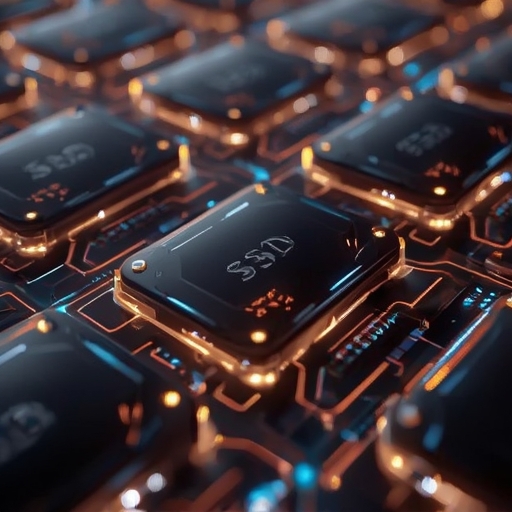
The global artificial intelligence revolution has ignited a profound transformation across the technological ecosystem, extending far beyond algorithms and software into the very foundation of computing hardware. As AI systems become increasingly complex and data-hungry, their insatiable appetite for high-speed memory and rapid data processing has intensified demand for components like solid-state drives (SSDs). This surge has triggered a dramatic spike in prices, reshaping both consumer markets and enterprise-level technology planning.
Over the past year, manufacturers and consumers alike have witnessed an extraordinary escalation in SSD costs. Models that once represented affordable, high-performance options—such as the popular WD Black 2TB drive—now command prices nearly four times higher than they did merely a year ago. This inflation is not arbitrary; it reflects the cascading effects of AI’s dominance throughout data infrastructure, cloud computing, and machine learning development environments. Each advanced neural network requires vast quantities of storage bandwidth to train, test, and operate efficiently, pushing hardware suppliers to compete for limited high-density memory output.
The implications of this trend reach far into the operational strategies of data-driven businesses. Organizations dependent on real-time analytics, simulation processing, or large-scale AI deployment are encountering tightened supply chains and challenging procurement scenarios. Tech companies, research institutions, and even creative production studios now face a hardware environment defined by scarcity and soaring costs. With semiconductor production cycles already strained by global logistics constraints, the intersection of AI innovation and material demand has accelerated what industry observers describe as a historic ‘storage crisis.’
As this momentum continues, experts anticipate that fluctuations in the hardware market will persist throughout the coming quarters. Enterprises must adapt by reassessing infrastructure budgets, optimizing existing storage systems, and adopting alternative memory technologies where feasible. Meanwhile, consumers upgrading personal computers or building new systems should be prepared for a shifting cost landscape—one in which high-speed storage solutions may remain a premium investment for the foreseeable future.
In short, the AI boom is no longer confined to software breakthroughs; it has become a catalyst for a broader hardware metamorphosis. SSDs, once considered a standard commodity of the digital age, have evolved into strategic assets central to the performance and scalability of next-generation computing. The interplay between artificial intelligence and storage technology therefore illustrates a defining challenge of modern progress: innovation may drive extraordinary opportunity, but it equally demands a reconceptualization of the physical resources that power the digital world.
Sourse: https://www.theverge.com/tech/908916/ssd-storage-shortages-price-increases


