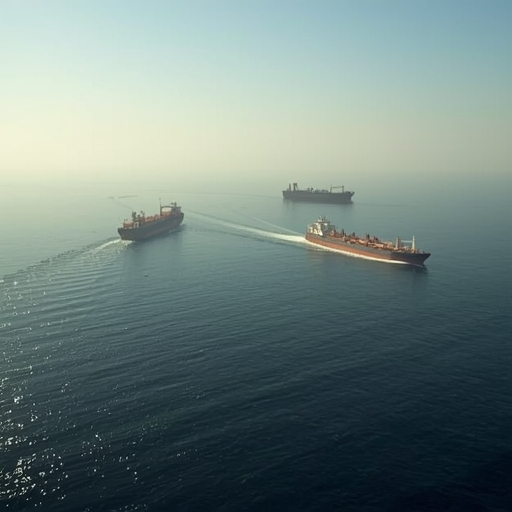
In the aftermath of the recently declared ceasefire between the United States and Iran, the Strait of Hormuz — one of the world’s most strategically significant maritime passages — continues to exude an atmosphere of uneasy stillness. Despite the tentative truce, which many observers had hoped would swiftly reinvigorate regional trade and maritime traffic, the scene remains largely motionless. The immense oil tankers and major corporate fleets that usually crisscross these waters with rhythmic precision remain anchored, their hulls immobile under the subdued shimmer of the horizon. For the time being, the domain has been ceded to a handful of smaller, more daring operators — independent shipping firms and agile regional traders willing to navigate the residual tension that others continue to avoid.
This cautious quietude illustrates not only a strategic pause but also a larger reflection of collective apprehension within the global energy and shipping sectors. To major oil companies and maritime consortia, the ceasefire appears less a definitive solution than an uncertain intermission — a delicate truce precariously balanced atop unresolved geopolitical rivalries. The hesitation of the heavyweights mirrors an industry’s instinct for self-preservation: in regions where history has repeatedly turned calm seas into conflict zones, financial prudence often outweighs operational momentum. These maritime giants weigh the potential of resuming activity against the unpredictable cost of renewed hostility, and for now, caution prevails.
Meanwhile, the relative boldness of minor players reveals another facet of global commerce — a resilient adaptability that thrives on risk and temporary instability. Smaller carriers, often more flexible and less entangled in public scrutiny or multinational compliance structures, occupy the vacuum left by their larger counterparts. To them, this lull is not paralysis but opportunity — a chance to secure contracts, reroute cargo, and forge transient advantages while the industrial titans hesitate. Yet their ventures, modest in scale, barely ripple the broader ocean of global trade.
The silence of the Strait, therefore, is neither peace nor crisis, but a complex equilibrium between restraint and necessity. Each motionless vessel and each cautious voyage embodies both the lingering specter of conflict and the slow, methodical calculation of global industries recalibrating their exposure. The world watches closely, aware that these still waters carry more than oil — they carry the pulse of international tension, energy dependency, and the unspoken question of how long the calm will last before the tide turns once again.
Sourse: https://www.businessinsider.com/us-iran-ceasefire-strait-of-hormuz-oil-shipping-traffic-transit-2026-4


