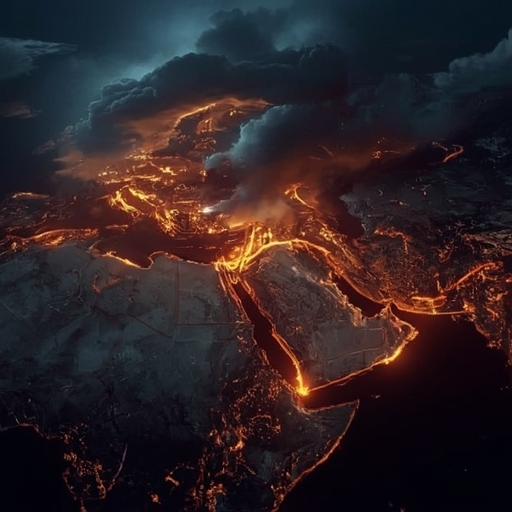
Goldman Sachs has delivered a sobering assessment of the current state of global energy dynamics, warning of an impending natural gas shock that could deeply unsettle international markets. According to the investment bank, recent attacks targeting Qatar’s liquefied natural gas (LNG) infrastructure have caused significant disruptions in a region that plays an indispensable role in worldwide energy supply. Qatar, as one of the foremost producers and exporters of LNG, provides roughly one-fifth of the planet’s liquefied natural gas. Consequently, any damage to its production or shipping capacity has the potential to reverberate globally, shaking the very foundations of energy security.
This alarming development draws unsettling parallels to the oil crises that defined several pivotal decades of modern economic history. Much like those events, the present situation illustrates the fragility of global energy interdependence, where geopolitical instability in one region can swiftly cascade into economic upheaval on multiple continents. Goldman Sachs cautions that such disruptions could catalyze steep price increases and amplify volatility across markets already strained by recent supply constraints, environmental transitions, and post-pandemic consumption surges.
The bank’s analysts have described this moment as potentially “very painful,” not only for energy markets but also for industries and consumers around the world. The effects of a prolonged LNG shortage could extend well beyond the energy sector, influencing manufacturing costs, transportation networks, and even household utility prices. Nations heavily dependent on LNG imports — particularly in Europe and Asia — may face renewed competition for supplies, reigniting concerns reminiscent of the energy crunch experienced during earlier geopolitical tensions.
Policymakers and corporate leaders are being urged to prepare for heightened uncertainty. Diversification strategies, the acceleration of renewable infrastructure projects, and the buildup of strategic reserves will likely become even more central to national and corporate energy planning. This episode also underscores how energy security remains intricately tied to global stability, diplomacy, and investment foresight.
Goldman’s warning thus stands as both an economic forecast and a reminder of systemic vulnerability. In a world striving for cleaner, more stable energy futures, the incident in Qatar has once again emphasized that disruption in a key production hub can spark a chain reaction extending far beyond its borders. If left unaddressed, the current situation could mark a turning point comparable to historical energy shocks — one that reshapes pricing models, strategic partnerships, and the very rhythm of global economic growth.
Sourse: https://www.businessinsider.com/goldman-natural-gas-price-shock-qartar-disruptions-oil-crisis-2026-4


