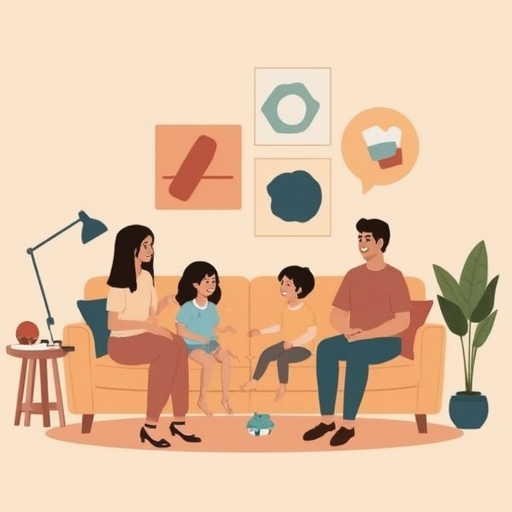
When I first made the unconventional decision to abandon the strict household rule against swearing, I anticipated chaos, eye-rolls, and perhaps an occasional shock at hearing certain words echo through the living room. Instead, something unexpected — almost profound — happened. Our home grew quieter, calmer, and, surprisingly, more connected. It turned out that eliminating the judgment surrounding language allowed each of us, particularly my children, to communicate with a level of honesty and emotional clarity that rigid politeness had previously prevented.
At its core, the no-swearing rule had been about control — about maintaining decorum, preserving appearances, and teaching respect through linguistic restraint. Yet, the moment that boundary dissolved, conversations transformed. My kids began to articulate feelings that had been hidden behind filtered vocabulary. When frustration or anger surfaced, they no longer bottled it up for fear of breaking a rule; instead, they voiced it — sometimes colorfully, always genuinely. Paradoxically, by giving them permission to use language society labels as ‘inappropriate,’ they actually became more thoughtful in how they communicated.
This shift didn’t mean our home devolved into a storm of profanity. Rather, it evolved into a space where words served their purpose — to express emotion, not to offend. If one of my children dropped a curse word after a long day or a painful experience, I didn’t reprimand them; I listened. And in listening, I realized that these words often carried truths that polite conversation could never reach. Anger and confusion found language, and with language came understanding.
The benefits extended beyond venting frustrations. Over time, the freedom to speak openly fostered deep trust. My children began approaching me with honesty untainted by the fear of being scolded. Discussions that once escalated into arguments instead turned into dialogues about why they felt the way they did. Even when tensions ran high, our exchanges became more reflective than reactionary. The permission to use so-called ‘bad’ language somehow stripped away defensiveness, leaving only authenticity.
Of course, boundaries remained. We discussed context — the difference between using strong words to express emotion and using them to hurt someone. This distinction became a powerful lesson in empathy, far more impactful than any lecture about ‘good manners.’ They learned that communication isn’t about censorship, but about intention. And I learned that respect isn’t proclaimed through vocabulary, but built through trust.
In today’s world, where emotional suppression often masquerades as civility, choosing openness over restraint feels radical. Yet I’ve come to believe that genuine communication — even when messy — is worth far more than perfect courtesy. Allowing my kids to swear didn’t erode respect; it strengthened it. It reminded all of us that relationships flourish when people feel heard, not managed.
So, if you were to walk into our home and catch a colorful word or two mid-sentence, you might raise an eyebrow. But you’d also notice laughter, honest exchange, and a peaceful ease that no rule could have built. In the end, this experiment taught me that family harmony doesn’t come from silence or perfection, but from the courage to communicate without fear of imperfection — even if that sometimes means letting a few four-letter words fly.
Sourse: https://www.businessinsider.com/why-i-let-my-kids-swear-parenting-lessons-2026-4


