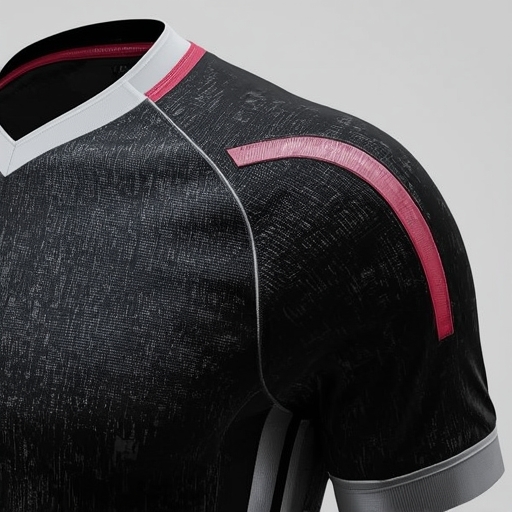
In the months leading up to the highly anticipated World Cup, Nike has found itself navigating an unexpected design complication that has stirred conversation across both athletic and design communities. The brand’s newly unveiled soccer jerseys—crafted for elite national teams set to compete on the world stage—have been met with mixed reactions following reports of unusual shoulder bulging. This distinct fabric formation, noticed by several professional players during early wear tests and practice sessions, has earned a playful yet telling nickname among insiders: the “unwanted shoulder pads.”
This occurrence reveals a fascinating intersection between creativity, technology, and functional performance in the realm of sportswear innovation. While Nike’s design team pursued advanced fabric construction and sculpted fits intended to enhance aerodynamics and athlete mobility, the resulting structure appears to have overemphasized certain contours of the shoulder area. The effect—slight but visually noticeable—creates an unintended silhouette that deviates from the sleek, anatomical look that athletes and fans have come to expect from the brand’s modern kit designs.
Such instances underscore the delicate balance between visionary product development and real-world usability. In the laboratory or digital prototype environment, innovative materials often respond ideally to theoretical stresses. However, once athletes begin dynamic motion—jumping, sprinting, and colliding under real playing conditions—the smallest inconsistency in textile tension or seam alignment becomes magnified. The “unwanted shoulder pads,” therefore, serve as a modest yet instructive reminder that perfection in garment engineering is often achieved incrementally, through iterative testing and on-field feedback rather than through design abstraction alone.
For Nike, a global symbol of performance and progressive design, this feedback loop is hardly new. Every generation of uniforms has involved countless refinements, balancing state-of-the-art fiber technologies with ergonomic comfort. This latest challenge—visible though not catastrophic—demonstrates that experimentation, even by world-leading innovators, naturally invites occasional miscalculations. What may begin as a technical misstep frequently transforms into an opportunity for adaptive improvement, guiding future fabric calibrations and adjusting production specifications before full-scale distribution.
In a broader sense, the conversation around these jerseys extends beyond aesthetic nuances. It touches on essential questions of how brands translate ambition into tangible quality. The World Cup provides a global audience and thus magnifies even minute discrepancies between design intent and performer experience. Companies operating at this level of visibility must continually manage the tension between pushing technological boundaries and ensuring that the finished product honors the functional requirements of elite competition. Each visible wrinkle—literal or figurative—reminds both designers and fans that innovation thrives on resilience as much as creativity.
As teams and players prepare to take the pitch under the spotlight of international scrutiny, Nike’s developmental journey with its latest uniforms stands as a case study in relentless iteration. The brand’s commitment to continuous improvement ensures that every critique becomes data, every anomaly an invitation to perfect the relationship between form and function. In essence, the so-called “unwanted shoulder pads” are not just an aesthetic hiccup—they are a testament to the living, evolving nature of design itself. Through trials such as this, excellence is not diminished but refined, shaped by the very athletes who bring each creation to life on the world’s greatest stage.
Sourse: https://www.businessinsider.com/world-cup-soccer-shirts-nike-2026-4