CinemaCon has once again proven itself to be the stage where the future of blockbuster cinema takes shape. Among the most talked-about reveals this year was the exhilarating first look at *Grandgear*, an upcoming science-fiction epic directed by the visionary Takashi Yamazaki and produced by the acclaimed filmmaker J.J. Abrams. Early footage shown exclusively to attendees hinted at a cinematic experience so grand in scope that it may very well usher in a new era for mech-based storytelling on screen.
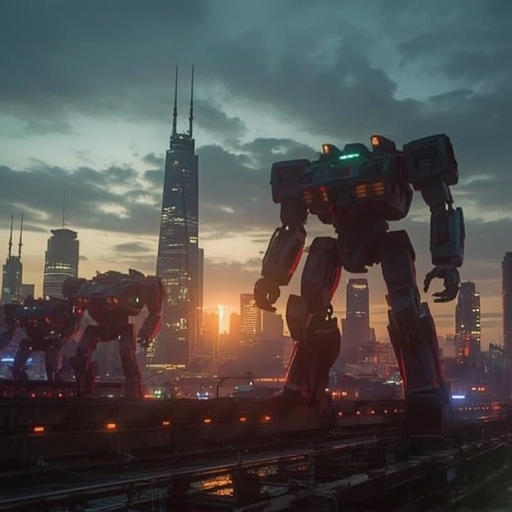
Set for release in 2028, *Grandgear* is being heralded as the spiritual successor to the legendary *Pacific Rim*, but with an even more ambitious narrative framework and a visual design philosophy that pushes the frontier of cinematic technology. The teaser footage reportedly showcased colossal mechanized titans locked in combat amid sprawling futuristic cityscapes—each frame charged with kinetic energy and gritty realism. These massive robotic entities, intricately detailed and rendered with Yamazaki’s hallmark precision, establish a tangible sense of scale where the human element and mechanical power collide dramatically.
Takashi Yamazaki, whose previous works seamlessly blend digital artistry with emotional storytelling, appears poised to redefine how filmmakers approach large-scale science-fiction drama. His collaboration with J.J. Abrams — known for his signature blend of mystery, spectacle, and emotional depth — suggests a fusion of storytelling philosophies capable of producing something both visually electrifying and narratively resonant. The partnership alone has fans and industry insiders alike speculating that *Grandgear* could set new benchmarks for immersive world-building.
Beyond its visceral visuals, the film promises to explore profound themes — human ambition, technological symbiosis, and the existential struggle between innovation and self-preservation. The mechs, or “Grandgears,” symbolize more than instruments of war; they represent humankind’s simultaneous fear and fascination with its own creations, a motif that resonates strongly in this age of rapid technological evolution.
CinemaCon audiences described the presented footage as a striking blend of elegance and chaos: neon-lit skylines collapsing under mechanical might, pilots navigating impossibly complex control systems, and vast set pieces that bridge the tactile and virtual worlds through cutting-edge visual effects. The attention to detail, particularly in the interplay between light, scale, and motion, speaks to the film’s ambitious design ethos — one committed to evoking awe and emotional gravity in equal measure.
If the early reactions are any indication, *Grandgear* is not merely positioning itself as another entry in the mech-action subgenre but as a reinvention of it. Drawing inspiration from classic Japanese mecha traditions while embracing modern cinematic sensibilities, the project aims to captivate both long-time genre enthusiasts and newcomers yearning for a spectacle that feels authentic and emotionally charged.
As anticipation builds, the consensus among critics and fans is that *Grandgear* embodies the perfect convergence of vision, technology, and storytelling passion. Whether it indeed becomes the defining sci-fi epic of the decade remains to be seen, but if its debut presentation is any measure, audiences in 2028 can expect an experience that transcends convention — one that is as intellectually provocative as it is visually explosive. ⚙️🚀
Sourse: https://gizmodo.com/the-new-movie-from-takashi-yamazaki-could-be-the-new-pacific-rim-2000746318