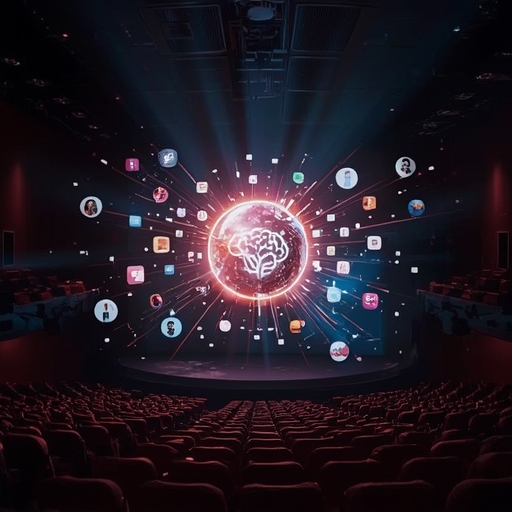
In an era where artificial intelligence steadily intertwines with nearly every aspect of our daily lives, the world of entertainment faces a particularly transformative shift. Jason Blum, the visionary film producer renowned for reimagining the modern horror genre, offers a perspective that challenges much of the existing narrative surrounding AI’s role in Hollywood. His observation turns an industry-wide concern into an insightful reinterpretation: rather than eroding or replacing the filmmaking craft, AI-generated media threatens to absorb the same precious resource that film has always contended for—our attention.
Blum argues that artificial intelligence is not poised to dethrone cinema. The irreplaceable emotional resonance of storytelling, the collective darkness of a theater, and the human artistry behind compelling performances remain beyond the reach of algorithmic automation. AI tools, while powerful, tend to emulate rather than originate the kind of visceral creativity that defines great filmmaking. However, his insight emerges from an understanding that the battlefield for audience engagement has subtly shifted. The competition is no longer defined solely by box office numbers or streaming subscriptions, but by how many minutes of our day—and how much of our cognitive focus—can be captured amidst the endless scroll of digital information.
In this context, the genuine “rival” to Hollywood is not a sentient computer or a robot screenwriter, but rather the omnipresent lure of AI-driven social media feeds, recommendation algorithms, and synthetic influencers populating our mobile timelines. These technologies already generate immersive, personalized streams of images, voices, and narratives tailored to each user’s desires and curiosity. With every flick of a thumb, viewers receive content that seems crafted exclusively for them, blurring the boundaries between media consumption and algorithmic manipulation. Blum’s reflection reminds us that AI’s most immediate impact is psychological rather than industrial—it seizes our innate craving for novelty and satisfaction, reshaping how and why we choose to engage with visual stories.
For the creative community, this realization sparks both warning and opportunity. While artificial intelligence offers filmmakers and studios new methods of editing, visual effects, and ideation, it also forces them to compete against an entirely different tempo of consumption—a culture addicted to immediacy. Within a fifteen-second clip, an influencer or AI-generated avatar can evoke emotions that once required years of cinematic refinement. Audiences, conditioned by constant digital feedback, may begin to measure artistic worth through speed and accessibility rather than craftsmanship or narrative depth. In such an environment, Hollywood’s challenge becomes not how to resist AI, but how to wield it without sacrificing human imagination to mechanical convenience.
Blum’s vision ultimately encourages audiences and creators alike to reconsider the essence of creative innovation in the age of artificial intelligence. The future of entertainment, as he envisions it, will not be a simple duel between humans and machines on the production floor, but an ongoing negotiation for the world’s most valuable commodity—our sustained attention. Film will survive not by mimicking the relentless flow of algorithmic media, but by offering something technology cannot replicate: authentic emotion, shared experience, and a reminder of what it means to be human amidst the digital deluge.
Sourse: https://www.businessinsider.com/jason-blum-blumhouse-productions-ai-hollywood-meta-deal-lesson-2026-4