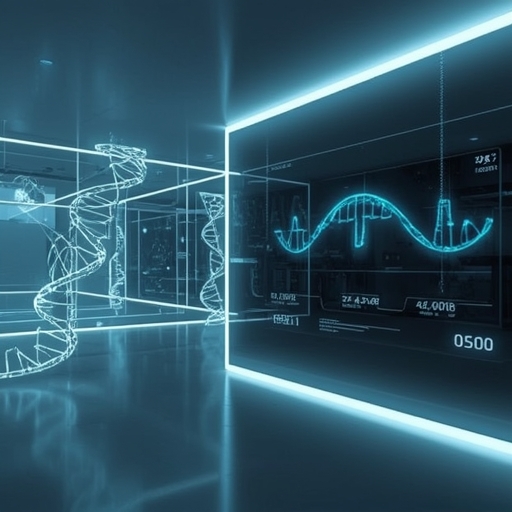
In the modern landscape of health innovation, a groundbreaking idea is capturing the imagination of scientists, wellness enthusiasts, and forward‑thinking individuals alike: a rapid biological age assessment that unveils the true pace at which the human body is aging. Unlike the mere count of birthdays, this test seeks to decode the story written in our cells—offering a profound reflection of our internal vitality and the cumulative impact of our lifestyle choices over time.
This emerging technology stands at the intersection of data science, biology, and preventive medicine. It distills years of research in genomic biomarkers and metabolic signals into an accessible, streamlined process capable of producing meaningful insight in minutes. By translating complex molecular data into an intuitive age‑related value, the test empowers individuals to perceive health not as a static condition but as a dynamic, measurable continuum, one that can be guided and improved through informed choices.
Consider the implications for both the medical community and everyday health seekers: professionals gain an instrument that can contextualize patient wellness far beyond traditional diagnostics, while individuals are offered a tangible benchmark to evaluate interventions such as improved nutrition, increased physical activity, or personalized longevity therapies. The excitement surrounding this development lies not simply in the novelty of the method, but in its capacity to democratize advanced biological knowledge, transforming what was once a laboratory‑level analysis into an everyday tool for self‑understanding.
At its core, the test challenges our conventional view of aging. It suggests that the true measure of time’s passage is neither the calendar nor the mirror, but the resilient biochemical narrative unfolding within us. To learn that one’s biological age diverges, perhaps dramatically, from chronological age is both awakening and empowering—a scientific mirror revealing how well our physical systems have endured and adapted. This perspective redefines wellness from a reactive pursuit to a proactive exploration of longevity, guided by quantifiable feedback and continual refinement.
The enthusiasm surrounding this innovation reflects a broader transformation in health culture—away from generic advice and toward precision, personalization, and self‑experimentation. The convergence of digital health platforms, molecular analytics, and smart data visualization promises to bring such insights directly into our daily routines. The biological age test thus becomes more than a diagnostic novelty; it embodies a philosophy that aging can be measured, understood, and even influenced.
In essence, this technology serves as a bridge between the science of life extension and the art of mindful living. By illuminating the invisible processes that govern our vitality, it empowers us to become active stewards of our own biological destiny. The concept of age, once a passive label, now evolves into a living metric—one that encourages curiosity, informed action, and a renewed appreciation for the intricate systems sustaining human life. The future of longevity science may well begin with this revelation: that understanding how we age is the first step toward aging better.
Sourse: https://www.businessinsider.com/bryan-johnson-shares-a-quick-biological-age-test-2026-4