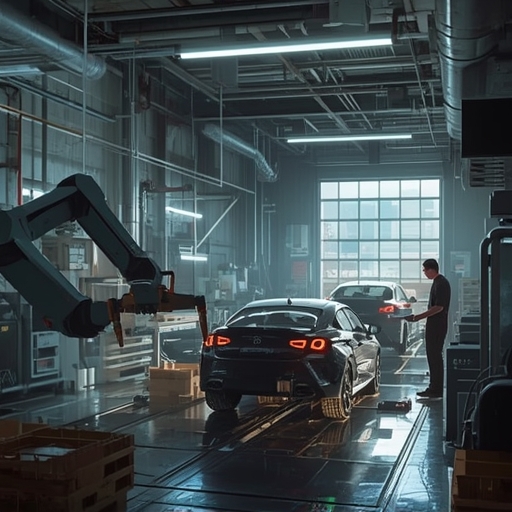
Artificial intelligence is no longer an abstract concept reserved for programmers or white-collar professionals—it is steadily permeating every arena of human labor, including the skilled trades traditionally powered by physical expertise and craftsmanship. While office workers have long anticipated automation reshaping their roles, we are now witnessing AI’s tangible emergence within factories, construction sites, repair shops, and manufacturing plants. Intelligent machines equipped with advanced sensors, robotic dexterity, and adaptive algorithms are beginning to alter not only the pace of production but also the very nature of what it means to perform blue-collar work.
This technological migration marks a profound economic and cultural turning point. In the past, manual labor was thought to be insulated from the reach of digital disruption, as it relied heavily on physical coordination and situational judgment. However, modern artificial intelligence systems—capable of recognizing patterns, predicting malfunctions, and optimizing complex workflows—are bridging that gap. The result is a hybrid environment where human skill merges with computational precision. Imagine a mechanic diagnosing an engine problem with the assistance of an AI-powered predictive maintenance tool, or a welder guided by an intelligent robotic arm that adjusts its technique in real time to ensure perfect symmetry. These scenarios, once futuristic, are quickly becoming everyday realities.
Yet, this transition brings with it pressing questions of adaptation and equity. How can both companies and individual tradespeople prepare for inevitable shifts in required competencies? Beyond mere technical retraining, embracing the AI revolution in trade industries will demand a redefinition of professional identity. Workers will need to cultivate an understanding of how to interpret, monitor, and collaborate with automated systems rather than compete against them. Similarly, employers must invest strategically in upskilling programs, ensuring that the benefits of automation enhance human capability rather than displace it.
Ultimately, the conversation surrounding AI’s influence on blue-collar employment transcends technology; it reflects society’s broader evolution toward a symbiotic relationship between human ingenuity and intelligent machines. The future of skilled trades lies not in replacement but in reinvention—a collaboration in which artisans, technicians, and builders harness automation as an ally that extends their precision, creativity, and productivity far beyond traditional limits. The AI-driven world is already under construction, both literally and figuratively, and the readiness to evolve with it will define the next generation of labor innovation.
Sourse: https://www.businessinsider.com/blue-collar-work-isnt-safe-ai-trade-tech-ceo-says-2026-4