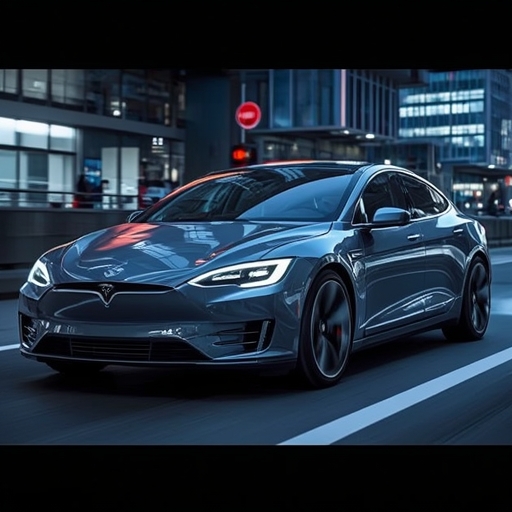
In a move that has drawn widespread attention throughout the automotive and technology sectors alike, the Chief Executive Officer of Ford Motor Company recently made an unconventional choice during a personal test drive session. Rather than selecting a Tesla — the brand long regarded as the standard-bearer of electric vehicle innovation — he opted to explore the Xiaomi SU7, a car produced by one of China’s most rapidly emerging electronics and mobility innovators. His reasoning was candid yet compelling: Tesla, he noted, has not introduced an ‘updated vehicle’ in some time.
At first glance, this decision might appear to be a simple moment of curiosity, but its implications reach far deeper into the rapidly transforming landscape of global automotive competition. The gesture by Ford’s top executive symbolizes a subtle yet significant acknowledgment that innovation no longer follows a single corridor dominated by a few legacy pioneers. Instead, the field of electric mobility is broadening dramatically, encompassing new challengers that blur the lines between traditional car manufacturing and cutting-edge consumer technology. Xiaomi, once known primarily for smartphones and smart home devices, has entered the EV arena with remarkable speed and technical prowess, presenting vehicles that integrate software sophistication with efficient design and modern aesthetics.
By choosing to publicly test-drive a Xiaomi rather than a Tesla, Ford’s CEO underscored an essential truth: the pace of technological advancement in the electric vehicle industry is accelerating to such an extent that even long-reigning leaders must contend with ambitious newcomers capable of redefining the norms of progress. The move illustrates a broader awareness that innovation in the current era is dynamic, decentralized, and driven by a convergence of industries where consumer electronics, artificial intelligence, and sustainable engineering coexist.
Beyond the symbolic aspect, this narrative invites introspection across corporate boardrooms around the world. What does it mean for the established giants of the auto industry when disruptors from entirely different sectors begin to excel in the art of vehicle design, performance, and digital integration? The EV sector is no longer a closed ecosystem but a rapidly evolving network of visionaries and engineers competing to craft the next great revolution in personal mobility.
In essence, the Ford CEO’s choice served not just as a test of a car but as a subtle commentary on the nature of advancement itself. It reminds us that leadership, particularly in industries rooted in innovation, demands constant vigilance, humility, and the willingness to engage with fresh ideas, even when they come from unexpected directions. As each new brand introduces refined technologies, from advanced battery systems to AI-based driving experiences, the definition of what it means to be at the forefront of progress will continue to evolve. Today, as Ford’s leader demonstrated, the quest for excellence may require looking beyond the familiar to recognize where the next wave of ingenuity is taking shape — and understanding that the future of mobility could just as easily be engineered by a technology firm as by an automotive titan.
Sourse: https://www.businessinsider.com/ford-ceo-jim-farley-xiaomi-tesla-chinese-ev-2026-4


