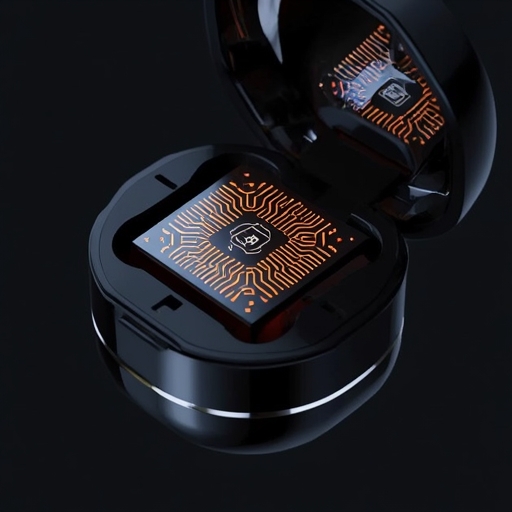
Anker has officially entered a transformative new chapter in its technological journey, unveiling the revolutionary ‘Thus’ processor — a tailor‑made artificial intelligence chip meticulously developed to elevate the company’s product ecosystem. Far beyond a typical hardware update, this innovation heralds Anker’s strategic expansion into the field of on‑device machine intelligence, enabling its devices to process information more effectively and autonomously without relying heavily on cloud‑based systems.
The ‘Thus’ chip is not merely another addition to the AI market; it represents a significant leap forward as the world’s first neural‑network compute‑in‑memory AI audio processor. In practical terms, this means that the chip is engineered to dramatically improve how data is stored, interpreted, and acted upon within the same semiconductor architecture, substantially reducing the latency and energy consumption typically associated with separate memory and computation units. This architecture allows Anker’s products—from wireless earbuds and smart speakers to portable chargers and IoT devices—to perform intelligent tasks such as sound enhancement, voice recognition, adaptive noise control, and contextual awareness directly on‑device. As a result, users experience faster response times, heightened privacy, and lower power draw, all wrapped within a sleeker form factor.
Miniaturization and efficiency lie at the heart of Anker’s design philosophy for ‘Thus’. Traditional AI processors often demand larger footprints and greater power consumption, restricting their integration into compact consumer electronics. By contrast, this chip demonstrates how sophisticated AI capabilities can coexist with portable design. Developers can now embed advanced neural‑processing functions within devices that fit comfortably in a pocket, offering both computational speed and environmental sustainability. It symbolizes a convergence where performance meets responsibility, further aligning with the growing demand for greener, low‑energy technology solutions across the global market.
Furthermore, the introduction of the ‘Thus’ processor underscores Anker’s commitment to vertical innovation—moving from hardware accessories toward foundational technology design. By controlling its own chipset development, Anker gains the ability to fine‑tune the synergy between software algorithms and physical hardware, ensuring a seamless integration that benefits end‑users in everyday applications. Imagine audio accessories capable of learning from listening environments, adjusting equalization dynamically, or IoT sensors that anticipate behavioral patterns—all possible through local inference powered by this new silicon architecture.
In essence, ‘Thus’ crystallizes Anker’s vision of making intelligence intrinsic rather than additive to technology. It exemplifies how smart devices can operate with higher cognitive capability and environmental respect simultaneously. With this debut, Anker positions itself not only as an industry participant but as a pioneer bridging the gap between engineering innovation and human‑centric design. The unveiling of the ‘Thus’ chip ultimately invites a rethinking of what local AI can achieve when efficiency, privacy, and sustainability are treated as integral design pillars rather than trade‑offs.
Sourse: https://www.theverge.com/tech/916463/anker-thus-chip-announcement


