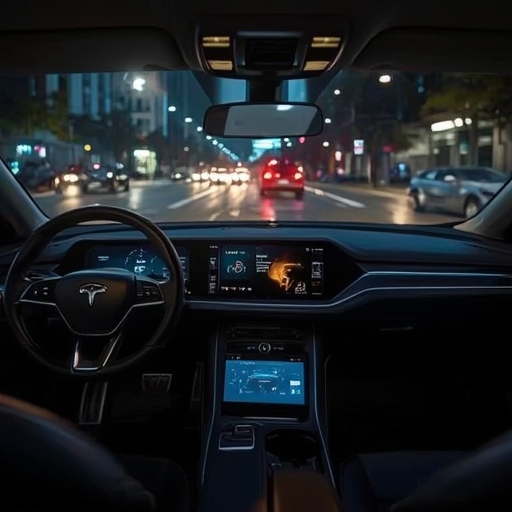
In a recent and rather consequential development, Tesla has publicly recognized that a vast number of its vehicles—amounting to millions worldwide—remain dependent on hardware upgrades before they can genuinely achieve the promise of Full Self-Driving capability. This revelation arrives after years of assertions and marketing language describing Tesla’s autonomous evolution as merely one software update away. The admission introduces a striking contrast between long-standing ambition and the tangible technological challenges that continue to shape the company’s trajectory.
For nearly a decade, Tesla’s branding around autonomy has emphasized the idea that its vehicles were already equipped with the hardware necessary for full automation, awaiting only iterative software refinements to unlock their potential. This narrative cultivated optimism among consumers and investors alike, fostering widespread belief that the company had already surmounted the primary obstacles to complete self-driving functionality. Now, the acknowledgment that hardware retrofits are essential reframes the conversation, illuminating the complex interplay between machine learning, sensor fidelity, computational power, and regulatory safety standards.
The implications of this pivot extend far beyond Tesla’s own ecosystem. By identifying the need for upgraded cameras, processors, and other critical components, the company implicitly concedes that the pathway to Level 5 autonomy—the stage at which vehicles can navigate without human interference in any scenario—is neither linear nor purely software-driven. Achieving such sophistication demands an integrated evolution of both physical and digital frameworks, where each enhancement directly influences the system’s ability to perceive, interpret, and respond to its environment with precision and reliability.
From an industry perspective, this situation serves as a broader reflection on the state of autonomous vehicle technology. It reminds observers that progress in artificial intelligence, while rapid, still faces material constraints rooted in physics, data quality, and ethical governance. The distinction between aspirational marketing and executable engineering becomes more pronounced when consumer safety and public trust are on the line. Tesla’s updated stance could, therefore, catalyze renewed scrutiny among regulators, as well as provoke deeper cultural conversations about the boundaries of technological optimism.
For Tesla owners, this realization may elicit mixed reactions—ranging from frustration over the cost and logistics of hardware retrofits to appreciation for greater candor regarding technical limitations. Prospective buyers might view it as a sign that long-term adaptability remains essential for ownership in an era when vehicles increasingly resemble evolving digital platforms rather than static mechanical products. The need for hardware modernization underscores an important truth: the future of intelligent mobility is as dependent on tangible infrastructure and hardware evolution as it is on cutting-edge software innovation.
Ultimately, Tesla’s disclosure marks a critical inflection point in the story of autonomous transportation. It invites reflection on the alignment between visionary goals and contemporary feasibility, emphasizing that the road toward true autonomy requires courage not just in innovation but in transparency. As the company continues to refine its Full Self-Driving technology, the world will watch closely to see how effectively it bridges the gap between promise, perception, and real-world performance—a journey as fascinating as it is defining for the future of modern mobility.
Sourse: https://techcrunch.com/2026/04/22/elon-musk-admits-millions-of-tesla-owners-need-upgrades-for-true-full-self-driving/


