Elon Musk has formally acknowledged that Tesla vehicles manufactured before the year 2023 will never be able to realize the dream of complete autonomous driving using their current suite of sensors, cameras, and onboard computers. This revelation, while disappointing to some long-term Tesla owners, provides valuable clarity about the boundaries of the company’s existing technology. Musk’s statement underscores a critical distinction between software potential and hardware capability — highlighting that even the most advanced algorithms cannot compensate for physical design limitations when it comes to achieving true self-driving.
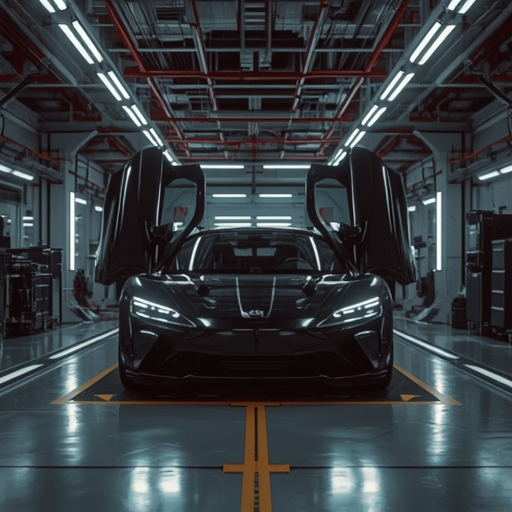
However, amidst this disclosure lies a significant thread of optimism. Tesla is reportedly laying the groundwork for what Musk describes as compact, highly specialized ‘mini‑factories’ — cutting‑edge facilities designed explicitly for efficiently upgrading older vehicles. Within these spaces, owners of affected Teslas may soon be able to replace or retrofit essential components such as sensors, processing chips, and cameras, effectively bringing older models in line with modern standards. The concept suggests a transformative approach to vehicle evolution: instead of simply phasing out outdated cars, Tesla aims to cultivate a sustainable ecosystem where existing owners remain active participants in continual innovation.
This development represents more than a technical adjustment — it is a paradigm shift in how automakers reconcile rapid technological progress with environmental responsibility and customer investment. Traditionally, major advances in automotive hardware have required purchasing entirely new models. By contrast, Tesla’s vision of modular hardware renewal could redefine ownership itself, emphasizing longevity, upgradeability, and adaptability. For the electric‑vehicle market, this model may serve as an industry blueprint, merging sustainability with high performance while reducing electronic waste.
In essence, Musk’s message reaffirms Tesla’s dual identity: both a software‑driven technology pioneer and a forward‑thinking manufacturer capable of reinventing conventional automotive infrastructure. Though current hardware imposes a ceiling on self‑driving capabilities for pre‑2023 vehicles, the prospect of scalable upgrades provides an avenue for progress — one that mirrors the iterative evolution of smartphones or computers rather than the short life cycles of traditional cars. The anticipated ‘mini‑factories’ could thus become symbols of an era where innovation and practicality finally converge, offering Tesla owners renewed value and participation in the company’s relentless pursuit of autonomy and sustainability.
Sourse: https://gizmodo.com/the-hardware-in-your-pre-2023-tesla-will-never-allow-it-to-fully-drive-itself-elon-musk-admits-2000749809


