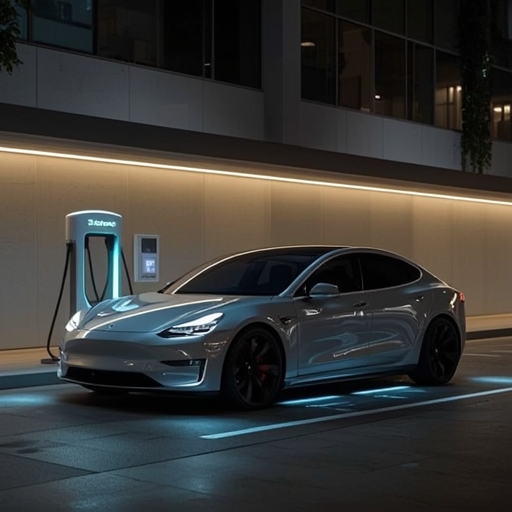
Tesla has recently made a decisive move that delineates the technological boundary separating its earlier vehicle generations from the new era of intelligent, self-driving mobility. The company has formally announced that full self-driving (FSD) functionality will no longer be feasible on older Tesla models without significant hardware enhancements. This means that owners of earlier vehicles will not be able to experience the most advanced autonomous features unless they choose to upgrade to newer systems equipped with the latest onboard computers, cameras, and sensors capable of processing the immense data required for real-time self-navigation.
This announcement serves as much more than a simple software update; it represents a pivotal moment in Tesla’s evolution and in the broader trajectory of the electric vehicle industry. By drawing a clear distinction between legacy hardware and its latest technological frameworks, Tesla underscores both the speed and inevitability of innovation within the field of artificial intelligence and mobility engineering. Much like smartphones that phase out older operating systems, these electric vehicles have reached a natural technological limit — their processors and camera arrays no longer possess the computational strength and precision necessary for the newest FSD algorithms.
From a practical standpoint, Tesla’s decision is a strategic balance between advancing innovation and maintaining product viability. Upgrading to new equipment not only allows drivers to access advanced autonomous functionalities but also ensures continued safety compliance within an increasingly complex driving environment governed by machine learning and sensor fusion. For example, new hardware configurations integrate multiple high-definition cameras and enhanced neural network chips, providing vehicles with faster response times and more reliable environmental awareness.
For longtime Tesla owners, this development may present both a challenge and an opportunity. While some may view it as a costly hurdle — requiring an investment in updated hardware or even an entirely new model — others may see it as a necessary evolution that keeps Tesla vehicles at the forefront of autonomous performance. The company has introduced trade-in programs and upgrade options to facilitate this transition, reflecting an acknowledgment of consumer loyalty as well as the urgency of technological progress.
Ultimately, Tesla’s announcement highlights the dynamic tension between innovation and obsolescence, a theme that resonates throughout the modern tech ecosystem. The vehicles of yesterday, though advanced in their time, cannot indefinitely support the demands of rapidly evolving self-driving intelligence. By incentivizing users to adopt systems built for the future, Tesla is effectively steering both its brand and its community toward a redefined standard of automotive autonomy — one in which hardware, software, and artificial intelligence operate as an integrated and continuously advancing whole.
Sourse: https://www.businessinsider.com/older-tesla-hardware3-fully-autonomous-self-driving-trade-in-2026-4


