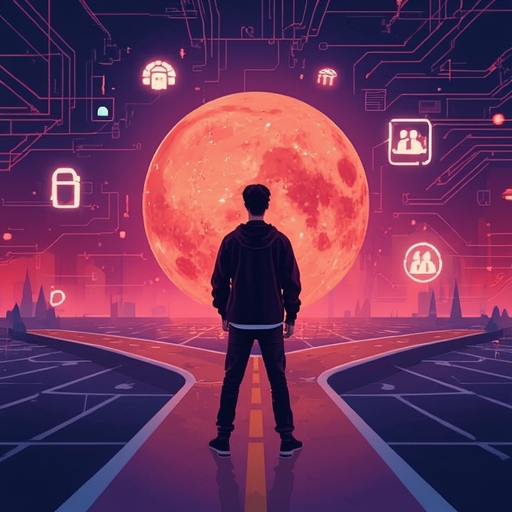
For countless college students, artificial intelligence has become far more than a technological novelty—it evolved into a constant companion throughout their academic journeys. Tools such as ChatGPT simplified research, accelerated essay writing, and offered instant clarification of complex topics. This unprecedented level of assistance often transformed the way students learned, helping many complete challenging assignments with efficiency and even creativity. Yet as these same students remove their graduation caps and step into the fiercely competitive job market, an equally pressing question surfaces: did AI empower them to think more deeply, or did it quietly cultivate dependence on technology to solve problems that once demanded independent thought?\n\nIn classrooms across the world, professors gradually witnessed a change in how students approached intellectual challenges. Instead of spending hours struggling through primary sources or drafting initial outlines, many could generate well-structured frameworks within minutes. While this undeniably expanded access to knowledge and improved output speed, the very ease of such processes risked eroding patience, persistence, and analytical rigor—the subtle yet vital skills that recruiters deem indispensable. Employers now increasingly emphasize adaptability, originality, and critical thinking, qualities that cannot be entirely replicated or outsourced to algorithms.\n\nFor these freshly minted graduates, the transition from academia—where AI was a safety net—to the professional sphere—where human insight drives innovation—may feel like a sharp adjustment. Hiring managers, impressed yet cautious, are beginning to ask not only what tools candidates can use, but also whether they can think beyond them. Can a graduate craft a persuasive argument, solve an unfamiliar problem, or interpret ambiguous information without relying on a conversational assistant? The answers to these questions will determine whether AI-era graduates are genuinely equipped for the responsibilities awaiting them.\n\nChatGPT and similar technologies should not be seen solely as enablers of dependency or shortcuts to intellectual effort. When used wisely, they function as accelerators for learning, amplifying what human curiosity and determination initiate. The difference lies in intent and depth of engagement. Students who treated AI as a collaborative aid—a way to spark ideas, improve communication, and refine reasoning—emerge more adaptable and insightful. Conversely, those who substituted thinking with prompting may find the workplace less forgiving, as real-world problems rarely come with neatly generated solutions.\n\nUltimately, the story of this graduating generation is one of redefinition. They are the first cohort to integrate artificial intelligence into nearly every aspect of their education, and they now face the challenge of redefining what intellectual independence means in the digital age. The balance they strike—between harnessing technological power and preserving human originality—will shape not only their careers but also the evolving fabric of work itself. Their success will depend on transforming AI from a crutch into a catalyst, ensuring that the creativity and discernment that distinguish human potential continue to lead the way, even in an era written increasingly by machines.
Sourse: https://www.businessinsider.com/college-graduates-ai-chatgpt-2026-4


