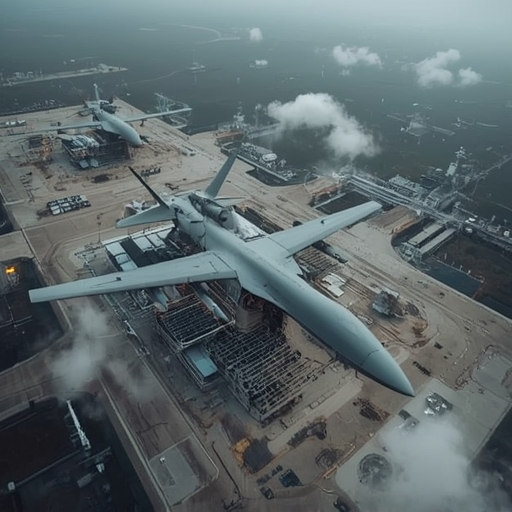
Recent high-definition satellite images have uncovered comprehensive structural enhancements at a key Russian drone facility, revealing the installation of substantially elongated metallic launch rails. These modifications are far more than mere architectural adjustments—they signify a deliberate and strategic transition toward accommodating the next evolutionary stage of unmanned aerial systems: the jet-propelled generation of Geran, or so-called loitering munitions. The appearance of these extended rails, which allow for heavier and faster drone launches, indicates a refined propulsion infrastructure meticulously engineered to support higher thrust levels and increased takeoff velocities.
This infrastructural evolution underscores Russia’s active pursuit of faster, longer-range, and more responsive unmanned strike capabilities. Such advancements reveal a broader trend within modern defense planning: the integration of emerging aerospace engineering with adaptive warfare strategies. By expanding its launch infrastructure, Russia demonstrates not only technical innovate capacity but also an awareness of the shifting demands of aerial combat. These developments may foreshadow a new chapter in drone warfare, where speed, altitude flexibility, and endurance become paramount performance metrics.
From an analytical perspective, the installation of these newly extended launch frameworks hints at an operational doctrine increasingly centered on rapid deployment cycles and prolonged autonomous engagement zones. The implications extend far beyond a single airfield, suggesting an evolving logistics network capable of supporting continuous launch sequences for reconnaissance, precision strikes, or diversionary missions. In a geopolitical context, this shift represents both a technological escalation and a psychological signal—an indication that the technological race in unmanned systems continues to accelerate globally.
Ultimately, this satellite-documented transformation showcases how aerial warfare is being redefined not solely through weapon design but through infrastructure capable of sustaining next-generation systems. The blending of satellite surveillance, defense engineering, and strategic foresight paints a vivid image of how rapidly the landscape of military capability can change, quietly and efficiently, beyond the public eye. These newly revealed modifications remind observers that technological superiority and logistical preparedness remain interdependent cornerstones of modern power projection.
Sourse: https://www.businessinsider.com/russia-built-out-base-new-jet-powered-drones-satellite-images-2026-4


