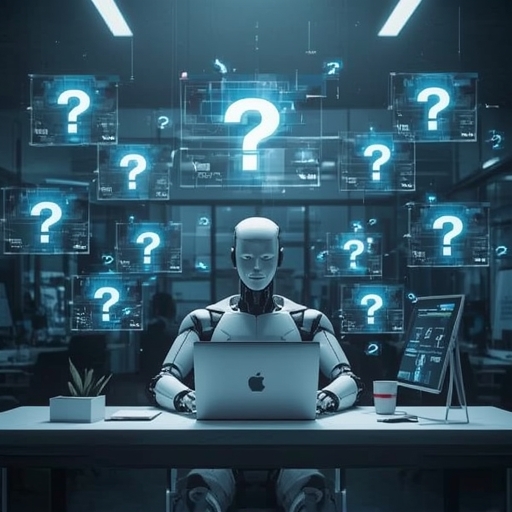
In a world where artificial intelligence increasingly shapes how information is produced, shared, and understood, a seemingly simple problem — AI making factual errors — becomes a profound concern. When a system like ChatGPT or similar tools presents inaccurate statements with complete confidence, it raises the pivotal question: what happens when society begins to rely on algorithms for truth itself? This is not merely a technical issue; it is a moral and epistemological one, striking at the core of how humans discern knowledge from illusion.
Artificial intelligence, with its remarkable ability to generate convincing language and simulate informed reasoning, can inadvertently blur the boundary between truth and misinformation. For example, when an AI confidently asserts false historical data, misquotes a source, or fabricates an academic reference, the illusion of authority can easily mislead even critical readers. Such instances illustrate how the technology’s persuasive fluency can create new vulnerabilities in public understanding. What once required deliberate deception by humans can now emerge spontaneously from computational error — yet its impact on trust and perception may be identical.
As we adopt AI-powered assistants, search tools, and content generators in professional and academic environments, the stakes rise sharply. The importance of accuracy, verification, and contextual judgment has never been greater. Relying on machine-produced knowledge without skepticism risks the formation of a digital landscape where misinformation is replicated faster than it can be challenged. In this climate, critical thinking — a skill already endangered by information overload — becomes the first line of defense against algorithmic error.
Moreover, the challenge extends beyond individual users to institutions and educators. It compels workplaces, schools, and media organizations to redefine what digital literacy truly means. Understanding AI’s mechanisms, biases, and probabilistic approach to language generation is essential for anyone seeking to use these systems responsibly. Blind trust in output, no matter how articulate, is equivalent to surrendering the human role of interpretation and ethical discernment. The obligation to question, cross-reference, and evaluate remains distinctly human — a responsibility that technology cannot replace.
Ultimately, the issue is not that AI makes mistakes — humans have always done so — but that its errors occur at unprecedented scale and speed, wrapped in the persuasive clarity of machine-generated confidence. The true test for society, therefore, is whether we will respond to this evolution with equal parts innovation and vigilance. The future of intelligent systems depends not solely on better algorithms, but on the wisdom with which we interpret them. If we maintain our capacity for thoughtful skepticism and nurture habits of verification, AI can become a collaborative instrument of knowledge rather than a conduit for confusion. The responsibility for truth, in the age of machines, remains an inherently human duty.
Sourse: https://www.businessinsider.com/lena-dunham-don-rickles-chatgpt-ai-answer-2026-4


