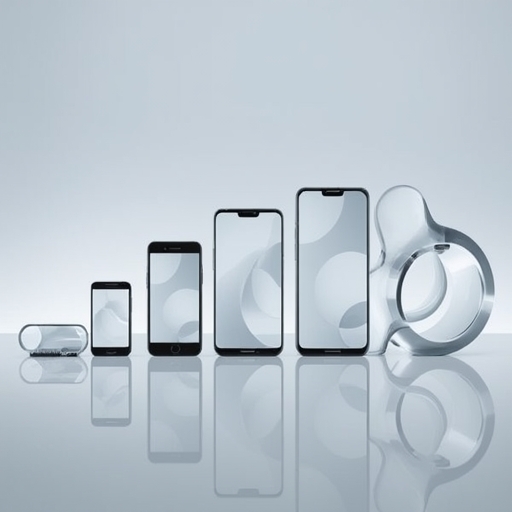
Leadership, in its most transformative form, is not merely about maintaining the status quo or following prevailing trends; it is about having the foresight to anticipate change and the courage to steer entire industries in new directions. When Apple, guided by the steady yet daring leadership of Tim Cook, made the strategic decision to embrace larger smartphone screens, that shift was far more than an adjustment in design — it represented a profound evolution in how technology aligns with human behavior, comfort, and creativity. The move toward devices that moved from pocket-sized to palm-filling was a statement: innovation thrives when vision meets listening, when data converges with intuition, and when a company dares to redefine what its own success looks like.
At the time, many questioned whether expanding the familiar dimensions of the iPhone might alienate loyal users who had celebrated its sleek, compact form since its inception. But Apple’s leadership demonstrated an acute understanding of an evolving global audience — one that was increasingly using their phones for immersive media, productivity, and storytelling rather than basic communication. The decision recognized an underlying truth about modern consumers: as digital lifestyles became richer, more visual, and more mobile, the devices facilitating them had to grow accordingly, not only in capability but also in presence.
This deliberate pivot was not a reactionary move; it was rooted in strategic anticipation. Tim Cook’s philosophy illustrates that visionary leadership often requires balancing fidelity to a brand’s essence with a willingness to adapt boldly when the world changes. Staying true to Apple’s minimalist design principles, each new iteration of the iPhone retained aesthetic purity while enhancing usability, durability, and emotional resonance with its users. The result was a seamless blending of form and function—an evolution that extended Apple’s influence far beyond its traditional boundaries and solidified the company’s role as a pace‑setter in global innovation.
In hindsight, the growth of the iPhone’s physical design mirrored Apple’s own expansion of vision. The company not only responded to consumers but also reshaped how they perceived mobile technology as an extension of individual expression, creativity, and connectivity. This shift elevated smartphones from tools of communication to instruments of experience — canvases for art, commerce, education, and identity.
Ultimately, Apple’s embrace of larger-screen smartphones underscores the essence of adaptive leadership: understanding when to evolve, knowing when to act decisively, and trusting in the power of a clear, forward‑looking vision to turn disruption into enduring advantage. Under Tim Cook’s leadership, Apple proved that innovation is not about the size of the screen — it is about the scale of imagination driving it.
Sourse: https://www.businessinsider.com/how-tim-cook-made-bigger-iphones-a-hit-for-apple-2026-4