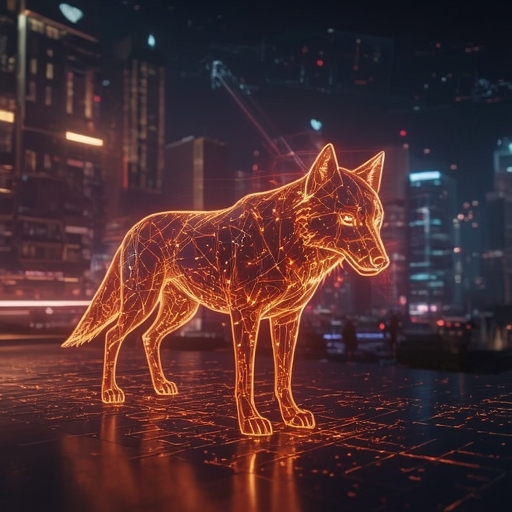
The rapid evolution of artificial intelligence has once again collided with the boundaries of human law, this time in an extraordinary case emerging from South Korea. A local man now faces the possibility of imprisonment for distributing an image of a wolf that was not drawn, painted, or photographed by human hands, but rather produced entirely by an AI-based image-generation system. This event, seemingly small in scope, has stirred a much wider discourse, provoking profound questions about the intersection of creativity, authorship, and accountability in the digital age.
At first glance, one might assume that an AI-generated image falls within the harmless realm of digital experimentation or artistic innovation. Yet this particular incident reveals the complex and sometimes conflicting moral, legal, and cultural frameworks surrounding generative technologies. As artificial intelligence grows increasingly sophisticated in producing images of striking realism and symbolic depth, society is being compelled to reconsider what it truly means to ‘create’ something. When a human simply describes an idea to an algorithm that then materializes it, can that human still claim authorship? And if the result offends, misleads, or violates a law, who can—or should—be held responsible: the user, the developer, or the algorithm itself?
The South Korean case brings these abstract questions into sharp, tangible focus. It underscores the challenge lawmakers face in reconciling a traditional legal system—one built on the premise of human intent and manual creation—with the unpredictable autonomy of machine-driven artistic processes. As technology continues to dissolve the boundaries between imagination and execution, digital creativity increasingly straddles both artistic brilliance and ethical grayness.
For artists, lawmakers, and technologists alike, this situation is emblematic of a transformative era where innovation continuously outpaces regulation. It invites a societal dialogue on how we might balance the boundless freedom of human creativity enhanced by AI with the collective responsibility to prevent harm and misunderstanding. The question is no longer purely philosophical; it is now urgently practical. How should our laws evolve to recognize creations inspired by machines while still upholding the core principles of accountability, authorship, and public good? The answer to that question may ultimately define the future relationship between art, artificial intelligence, and the very notion of human expression itself.
Sourse: https://gizmodo.com/south-korean-man-might-get-prison-time-for-posting-ai-wolf-picture-2000750787


