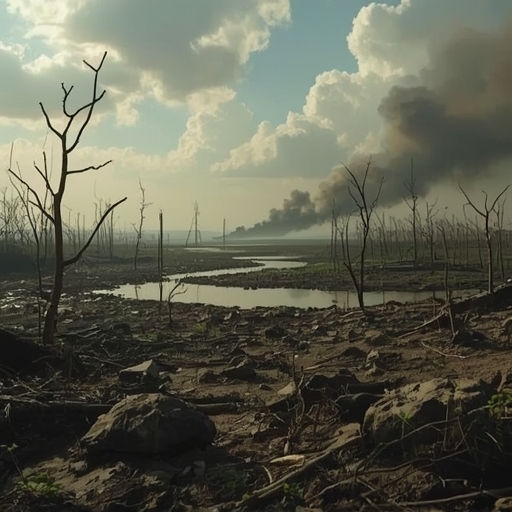
The enduring environmental repercussions of the Iran War reach far beyond the immediate chaos of armed conflict, infiltrating the very foundations of the planet’s ecological stability. When the sounds of battle subside and the smoke dissipates, what remains is not just the physical destruction of cities, but the slow, insidious degradation of the natural world. The Earth, though silent, bears the memory of war in every contaminated river, every dust-laden gust of wind, and every field rendered infertile by chemical and incendiary remnants.
The conflict has drastically transformed the Iranian landscape, producing layers of pollution that span air, water, and soil. Explosions, burning oil fields, and industrial damage have released thick plumes of carbon-based toxins into the atmosphere, contributing to worsening air quality and regional temperature changes. These contaminated clouds travel far beyond national borders, bringing with them particulates that accelerate respiratory illness in humans and wildlife alike. In agricultural zones already strained by drought and desertification, weapons residue and fuel leaks have rendered soil increasingly barren, disrupting local food production and threatening biodiversity.
Waterways, once vital for irrigation and drinking, have absorbed dangerous chemical runoff and heavy metals from damaged industrial sites and munitions. These pollutants accumulate over time, infiltrating the groundwater and poisoning aquatic ecosystems. Rivers that once sustained rural communities now carry invisible hazards, and coastal regions experience the gradual decline of marine life once central to local economies.
Such ecological wounds require decades, if not generations, to heal. The immediate focus during wartime is survival, yet post-conflict recovery often neglects the rehabilitation of the environment. This oversight perpetuates suffering long after peace agreements are signed, as populations return to polluted settlements and struggle to cultivate contaminated land. Desert expansion, deforestation, and water scarcity compound the damage, creating a feedback loop that undermines both reconstruction efforts and human health.
Addressing these profound and persistent effects demands a holistic approach that places environmental restoration alongside social and economic rebuilding. Policymakers, scientists, and humanitarian organizations must work in concert to assess ecological damage, contain contamination, and restore vitality to the ruined ecosystems. Reforestation programs, sustainable water management, and renewable-energy-driven reconstruction can act as catalysts for resilience, transforming war-torn regions into symbols of recovery rather than neglect.
Ultimately, the environmental cost of the Iran War stands as a powerful reminder that the consequences of human conflict extend far beyond human casualties. It compels us to view war not solely as a political or military event, but as a profound ecological crisis. The path to true peace, therefore, must include the revival of the Earth itself — healing the air, the rivers, and the soil that have suffered in silence alongside humanity.
Sourse: https://www.wired.com/story/war-on-iran-unseen-impact-on-environment/


