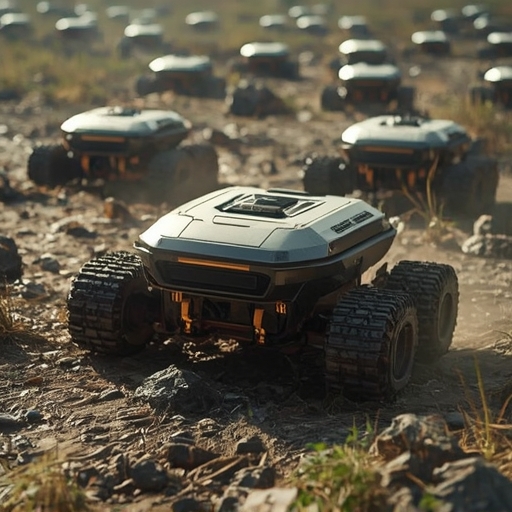
As the character of modern warfare evolves in real time, the principles of affordability, adaptability, and logistic sustainability are coming to the forefront of military innovation. The conflict in Ukraine has served as a real-world proving ground for these concepts, demonstrating how accessible, low-cost robotic systems can fundamentally alter both tactics and strategy. Unlike conventional armored vehicles—massive, expensive, and often irreplaceable once destroyed—compact and economical autonomous ground robots provide a new dimension of flexibility and resilience. These machines can be deployed in large numbers, perform reconnaissance or supply missions, and even take on direct-support roles without exposing soldiers to immediate danger.
This technological shift represents far more than a simple cost-saving measure; it signals a transformative rethinking of how combat operations can be sustained under conditions of attrition. The affordability of these robotic platforms allows militaries to adapt quickly to unexpected losses while maintaining forward momentum on the battlefield. They can function as expendable yet highly capable assets, bridging the gap between human decision-making and machine efficiency. As Ukraine’s experience continues to illustrate, every destroyed tank or damaged transport vehicle translates into immense financial and strategic loss. By contrast, losing an inexpensive robotic unit is manageable and easily mitigated by swift production and field replacement.
Moreover, these robots embody the fusion of autonomy, artificial intelligence, and remote-controlled precision. Their use reflects an accelerating global trend toward automation in defense, one that prioritizes risk reduction and operational agility. In an environment where every saved human life and conserved resource counts, such innovations promise to redefine the ethical and strategic calculus of warfare. The future battlefield may thus be dominated not by towering metal giants but by swarms of intelligent, low-cost machines—nimble, efficient, and purpose-built to carry out critical missions under the most demanding conditions. The lessons drawn from Ukraine’s ongoing struggle underscore that the next era of defense may very well depend on how quickly nations can integrate this technology into their strategic frameworks, balancing human ingenuity with robotic precision to safeguard both lives and long-term stability.
Sourse: https://www.businessinsider.com/cheap-ground-robots-long-war-tanks-weapons-maker-2026-4


