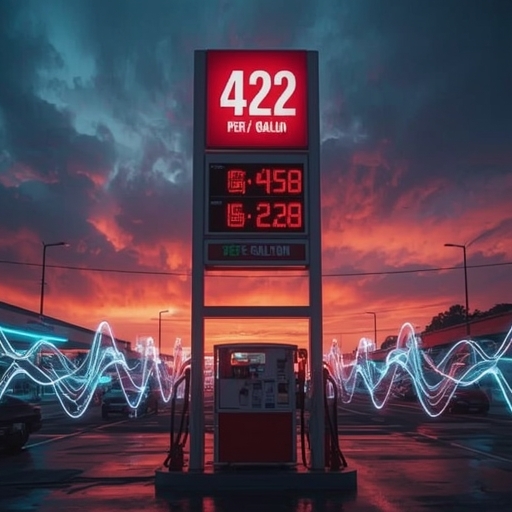
The average cost of gasoline across the United States has surged to an alarming $4.22 per gallon, marking the highest price level the nation has seen in four years. This milestone underscores the delicate interconnection between geopolitical unrest and global energy markets, reminding both consumers and industry leaders that fuel costs remain vulnerable to rapid, externally driven fluctuations. Over the past several weeks, mounting international tensions have sent shockwaves through oil supply chains, prompting traders and policymakers alike to reconsider projections for the remainder of the year.
This upward movement in prices is not merely a number displayed on gas station marquees—it represents concrete consequences rippling throughout the economy. Individuals are confronting higher transportation expenses, families are reevaluating travel plans, and businesses heavily dependent on logistics or shipping are recalculating their operational budgets to accommodate inflated fuel costs. In many metropolitan areas, commuters who rely on personal vehicles are feeling the pinch acutely, while rural communities, often with fewer transportation alternatives, bear an even heavier burden.
Economists describe this development as part of a broader, cyclical pattern in which geopolitical crises—such as disruptions in key oil-producing regions—translate almost instantly into tangible market volatility. Such scenarios illuminate the intricate balance between supply and demand, where even the perception of instability can trigger preemptive reactions in pricing. For organizations, this environment emphasizes the importance of strategic adaptability: leaders must assess how higher energy costs could cascade through production chains, impact goods distribution, and influence consumer behavior.
Looking ahead, the question many are asking is not only when prices might stabilize but also how sustainable resilience might be cultivated in the face of persistent uncertainty. Households may explore more efficient commuting options or increase reliance on remote work opportunities, while corporations might accelerate investment in energy diversification, alternative fuels, or route optimization technologies. Though challenging, these adjustments could yield long-term benefits by fostering reduced dependency on volatile commodity markets.
Ultimately, the current rise in U.S. gas prices serves as both a cautionary signal and a strategic call to action. It invites policymakers, investors, and everyday citizens to examine the fragile equilibrium that defines the modern energy landscape. Volatility, as this moment demonstrates, is no longer an exceptional event—it is an enduring feature of the global economy, demanding foresight, flexibility, and informed decision-making from all who participate in it.
Sourse: https://www.businessinsider.com/gas-prices-gallon-us-aaa-highest-since-2022-2026-4


