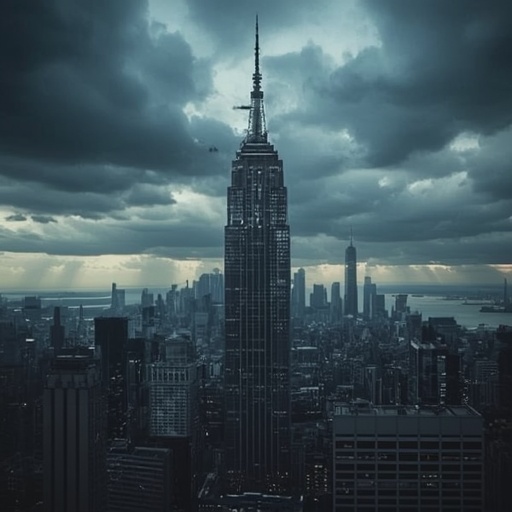
The atmosphere in Moscow has grown increasingly fraught with uncertainty and apprehension following reports that a Ukrainian strike targeted a luxury skyscraper situated only a few miles from the Kremlin, the symbolic and administrative heart of Russia’s power. This incident, occurring in one of the capital’s most affluent and architecturally modern districts, has intensified the sense of vulnerability within a city that has long projected an image of inviolable security. The building, emblematic of Russia’s post-Soviet economic resurgence and its aspirations toward metropolitan opulence, now stands as a visible reminder of the ongoing war’s capacity to reach even the political center of the country.
Coinciding with this development is the unprecedented modification of Russia’s annual Victory Day celebrations—the commemoration honoring the Soviet Union’s triumph in the Second World War. Traditionally, this parade has served as both a patriotic ceremony and a public demonstration of military strength, featuring columns of armored vehicles, tactical missile systems, and formations of marching soldiers that underscore Russia’s enduring military heritage. However, this year’s event marks a striking departure from precedent: for the first time in decades, there will be no heavy weaponry paraded through Moscow’s Red Square. The decision to scale down such an emblematic display signals both logistical and symbolic reconsiderations prompted by the war’s ongoing strain.
Analysts interpret this scaled-down celebration as indicative of the Kremlin’s desire to project a tone of solemn resilience rather than overt triumphalism. The omission of tanks, missile launchers, and other combat vehicles from the parade procession subtly acknowledges the immense pressures placed on Russia’s defense resources since the onset of the conflict. Moreover, the quieter tone of the commemoration serves to mirror the nation’s shifting internal mood—a mixture of endurance, fatigue, and measured defiance amid unprecedented international scrutiny.
The concurrence of these two events—the reported strike within Moscow’s urban core and the reduction of one of Russia’s most emblematic national ceremonies—forms a telling narrative about the changing dynamics of this protracted confrontation. What was once a distant war confined largely to the periphery is now, at least symbolically, intruding upon the very heart of the Russian state. While official responses remain cautious and tightly controlled, the symbolic resonance of these developments within and beyond Russia’s borders cannot be overstated.
In the broader geopolitical context, Moscow’s decision to moderate its Victory Day parade underscores a recognition that power can be asserted not only through overt displays of might but also through the deliberate management of national image during wartime. The muted celebration, juxtaposed with the city’s heightened security and the lingering specter of direct attacks, speaks to a country navigating the tension between projecting strength and acknowledging adversity. Together, these events encapsulate the fragile balance that defines Russia’s current political and psychological landscape—one simultaneously assertive and uncertain, defiant yet constrained, and acutely aware of the shifting realities of modern warfare.
Sourse: https://www.businessinsider.com/ukrainian-drone-strikes-moscow-skyscraper-mosfilm-threatens-victory-day-2026-5


