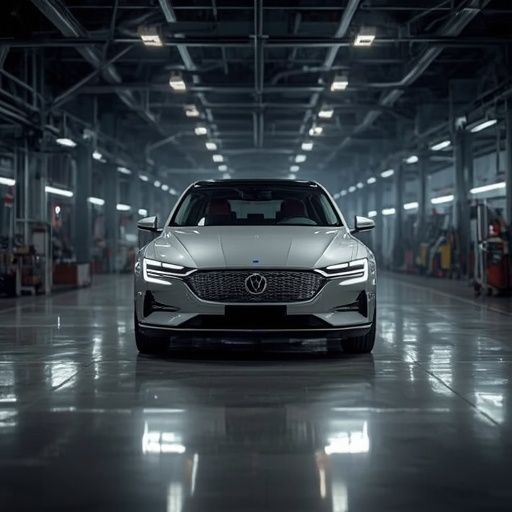
Lucid Motors, once heralded as one of the most promising pioneers in the world of luxury electric vehicles, now finds itself navigating a significant period of turbulence as 2026 begins. The company recently disclosed a staggering $1 billion quarterly loss, a financial signal that underscores a deeper stall in its sales performance and an urgent need to recalibrate its strategic direction. As a result of this downturn, Lucid has officially revised its production targets downward, an acknowledgment that its earlier expectations had outpaced the realities of consumer demand and production scalability.
This retrenchment marks not merely a temporary setback but a pivotal moment for Lucid’s executive team and stakeholders. The earlier momentum that fueled the company’s meteoric rise—driven by sleek design, technological sophistication, and an ambitious vision to rival long-established automotive giants—appears to have met the inevitable friction of a maturing electric vehicle market. As global competition intensifies, particularly from manufacturers that blend mass-market efficiency with innovation in design and battery technology, Lucid’s challenges highlight the intricate balance between maintaining brand prestige and achieving broader market viability.
From an operational perspective, the production cuts reflect pragmatic financial stewardship in an uncertain macroeconomic climate. Rising material costs, supply chain fluctuations, and consumer hesitation amid evolving economic conditions may all have contributed to the company’s more conservative stance. Yet, such restraint can also be interpreted as a strategic regrouping—an opportunity to refocus investment on core competitive advantages such as efficiency improvements, advanced battery systems, and luxury customer experience.
Beyond the immediate financial repercussions, this moment poses a question that echoes across the entire electric vehicle landscape: can innovation alone sustain a company’s trajectory when scaling complexities set in? For Lucid, the path to recovery and renewed investor confidence may depend less on ambitious production figures and more on fine-tuning execution—ensuring that each vehicle produced not only exemplifies technological excellence but also captures consumer trust and long-term brand loyalty.
Over the coming quarters, analysts and industry observers will be watching closely to see how Lucid navigates this inflection point. Will this period of financial strain propel a disciplined transformation that strengthens its foundation, or will it serve as a cautionary tale about the challenges of rapid growth in an increasingly crowded EV sector? Either way, the company’s response will reverberate throughout the industry, shaping perceptions of resilience, adaptability, and the true cost of innovation in an era where every charge, sale, and strategy counts.
Sourse: https://gizmodo.com/after-sales-stall-at-the-start-of-2026-lucid-drops-production-target-2000755359


