When my husband and I came to the striking realization that our three young adult children were unfamiliar with performing many of life’s most fundamental tasks, we were genuinely taken aback. These were not disengaged or careless kids—they were bright, inquisitive, and capable individuals whose curiosity extended to every other area of life. Yet, when confronted with practical challenges such as changing a tire, preparing their taxes, or cooking something more involved than a packaged box of macaroni and cheese, their confidence faltered. It became clear that while their education had equipped them with academic skills, certain basic, real-world proficiencies had quietly slipped through the cracks.
Initially, we approached these gaps as isolated teaching moments rather than signs of a broader issue. When a low tire pressure warning light came on, we didn’t simply fix it; instead, we demonstrated how to use a gauge, locate the proper air pressure, and refill the tire—step by step—so the knowledge would stick. When one of them returned home with a fast-food uniform that reeked of grease, we didn’t grab the detergent ourselves but walked through the practical process of laundering and deodorizing the shirt. And when the weeds in our flower bed began to resemble a miniature jungle, we handed over the weed trimmer and explained its workings. Each instance seemed like a contained, teachable moment—until we recognized a repeating pattern.
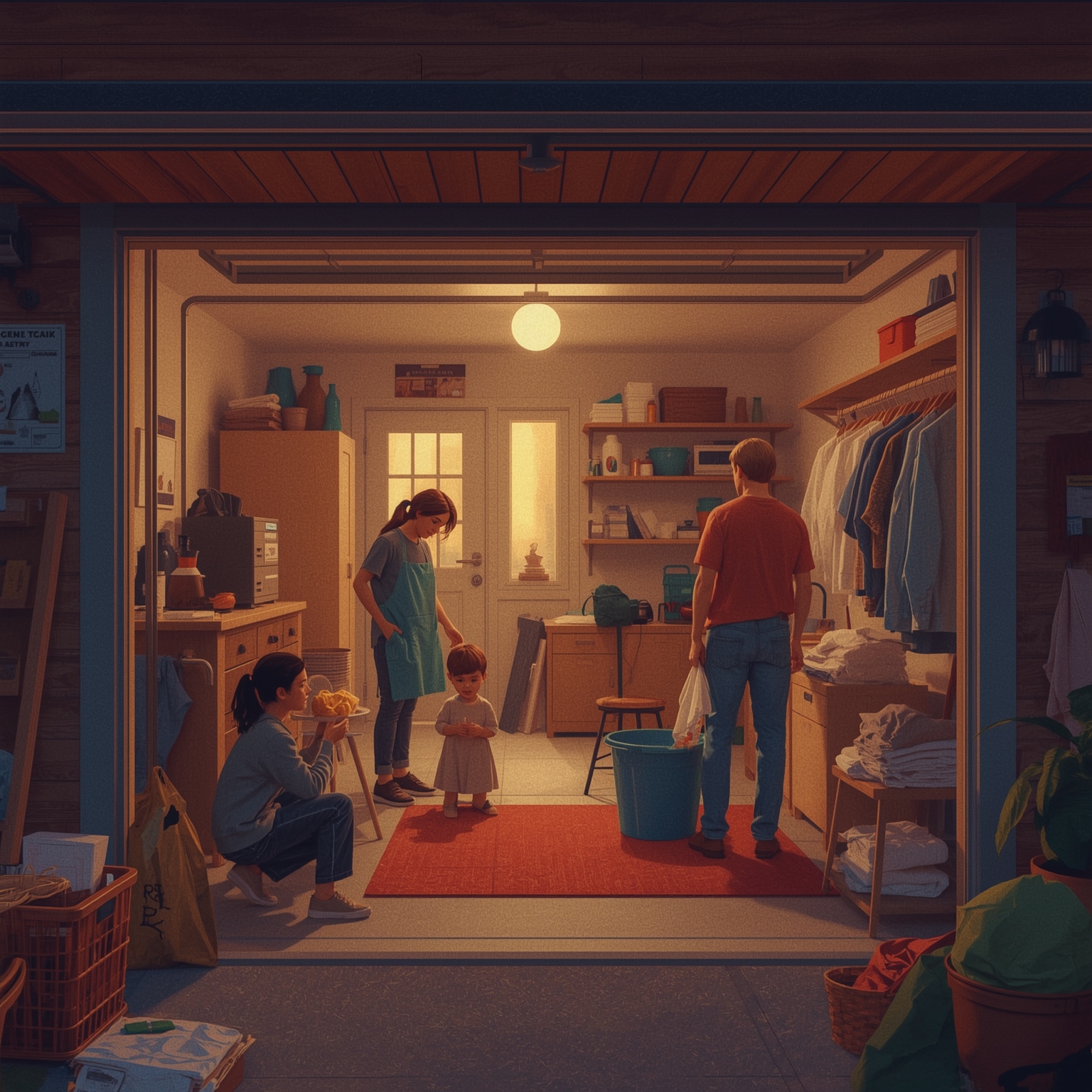
Before long, we noticed this lack of everyday know-how extended far beyond our own family. Their peers—college students balancing academics, part-time employees managing limited schedules, and even young professionals embarking on their careers—were equally unsteady when facing similar life tasks. Without planning it, our home evolved into a kind of informal community classroom, a welcoming environment where young adults could learn practical skills without fear of judgment. One week we hosted a small impromptu “tax clinic,” showing first-time employees how to file their returns. The next week, the focus was on mastering the art of grilling burgers or understanding car maintenance basics. Over time, the pattern became impossible to ignore: these young adults were not lazy, apathetic, or unmotivated—they simply lacked exposure. They had never been shown how.
And, in truth, when I looked back, neither had I. I realized this was not a generational flaw or a so-called “Gen Z problem.” It was, instead, a symptom of how many families—including my own growing up—expressed care. As a newly married young woman, I once spent an entire year confidently “washing” clothes using nothing but fabric softener, blissfully unaware that detergent was an entirely different product with a distinct purpose. When someone finally explained the difference, I wished the floor would swallow me whole. My mistake wasn’t rooted in carelessness; it came from ignorance born out of love that had been overprotective. My parents had shown affection by doing everything for me, which was wonderful at the time, but it left me unprepared for self-sufficiency once I was on my own. That embarrassing memory stayed with me, eventually motivating me to become the approachable, patient mentor I had needed back then—someone who could guide without condescension.
When my husband and I began intentionally mentoring, our philosophy centered not on lectures or criticism, but on empowerment. When a challenge arose—whether theirs or a friend’s—we made a conscious effort to resist the parental impulse to swoop in and fix it ourselves. Instead, we broke complicated tasks into digestible, logical steps, ensuring that those learning experienced the satisfaction of doing the work themselves. For example, one afternoon when I was walking my youngest through his tax filing process, a college senior visiting our home timidly asked whether someone who only worked part-time even needed to file taxes at all. This moment became an impromptu mini-lesson on the “why” of taxes—the reasons behind the process, the potential refunds or credits often missed by students, and the importance of understanding the system early. The next time I saw him, he proudly brought his W-2 form and laptop to show me he had successfully set up his own file on TurboTax. The newfound pride on his face was unmistakable; he had crossed a threshold of independence.
Another young man we knew had diligently saved for his first car, researched models and financing, and even arranged a test drive. Yet, when the time came to finalize the deal at the dealership, he hesitated. He didn’t want someone to handle it for him—he simply wanted reassurance. What he required wasn’t our intervention but our presence—a silent confidence in his capability. Ultimately, neither of these young adults needed rescuing; they only needed encouragement, someone to stand nearby as a steady anchor while they practiced navigating adulthood.
Of course, there are times when I don’t have all the answers myself. Tax codes change, engine parts vary from one vehicle to the next, and even the most promising recipes occasionally fail in spectacular fashion. In those cases, instead of pretending expertise, I open my laptop, sit beside them, and say, “Let’s figure this out together.” Platforms like YouTube have become our virtual teachers, offering visual walkthroughs that transform confusion into competence. Paradoxically, admitting that I don’t know everything has made my guidance more credible. It shows my children—and their peers—that adulthood isn’t about omniscience; it’s about resourcefulness, adaptability, and the confidence to seek information when you need it.
Perhaps my favorite moments are those when learning cascades from one person to another. Recently, a young man showed up at the house with a nail embedded in his tire, asking for help. Rather than stepping in, I turned to my son and asked if he thought he could teach his friend how to fix it. It took nearly an hour of trial, error, and patience, but by the end, one young man gained a new practical skill while the other discovered how satisfying it feels to share hard-earned knowledge. Passing skills forward is itself a form of mentorship—and watching that chain continue is profoundly rewarding.
Reflecting on all these experiences, I often think back to my younger self—the twenty-year-old version of me who longed for an approachable adult who could gently explain life’s simple mysteries without causing embarrassment. That unmet need continues to inspire me today. In the end, all these small lessons—whether it’s teaching how to cook an egg, file a form, or negotiate with a car dealer—are merely vessels for something much larger. They are opportunities to build trust. When young adults learn they can come to us with small uncertainties without fear of ridicule, they begin to trust that they can also approach us when life presents larger, more daunting challenges. That, in essence, is what true mentorship looks like: not a transfer of knowledge alone, but the quiet creation of a safety net built from confidence, compassion, and mutual respect.
Sourse: https://www.businessinsider.com/became-mentor-to-adult-kids-and-their-friends-2025-10