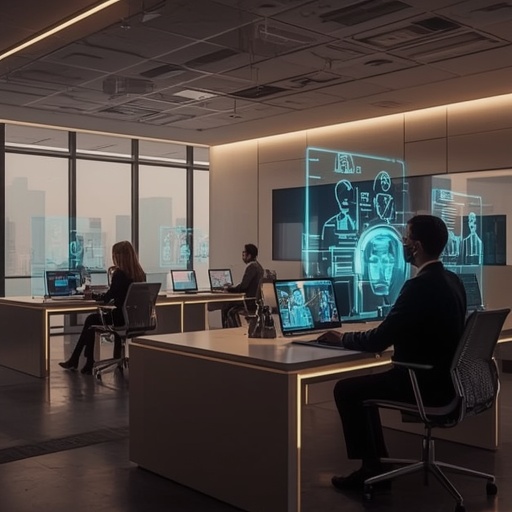
The modern workplace, once filled with the constant hum of conversation, clattering keyboards, and the low roar of daily commotion, is on the brink of a profound transformation. The office of tomorrow will not be defined by noise or chaos; instead, it will hum gently with the subtle, almost imperceptible murmur of voices conversing not with other humans, but with intelligent digital systems. In this near future, employees might find that the most common interaction is a soft-spoken query to an AI assistant rather than a shout across a cubicle. This evolution toward a quieter environment is not merely aesthetic—it is emblematic of a deeper cultural shift in how humans and machines coexist and collaborate in professional spaces.
As conversational artificial intelligence becomes increasingly integrated into both personal and professional spheres, the very architecture and design of our offices will need to evolve in fascinating ways. Designers and technologists alike may focus on creating spaces that facilitate efficient, voice-driven exchange while maintaining a sense of privacy and acoustic comfort. Imagine workstations enclosed in smart, sound-responsive partitions, capable of recognizing individual voices and filtering noise intelligently, ensuring that one’s conversation with an AI companion remains confidential. Such innovation transforms not just the soundscape of the workplace but also its rhythm—moving from frenetic multitasking toward calm, intentional interaction.
The implications of this transformation extend beyond architecture into workplace psychology and culture. A quiet, voice-centered environment may foster deeper concentration and mindfulness, allowing employees to work with heightened awareness. Instead of constant visual stimulation—endless screens, flashing notifications, or chatter-filled meetings—communication will shift toward auditory minimalism. Teams may find themselves coordinating projects by uttering commands to shared virtual assistants or receiving updates whispered discreetly through their devices. The result is a sophisticated ecosystem where human intuition and machine precision intersect harmoniously.
This silent revolution, however, also invites new questions and challenges. How will organizations ensure that these quiet spaces remain inclusive for diverse communication styles? Will employees feel isolated if the social fabric of the office becomes mediated by algorithms rather than spontaneous human connection? Designers of the voice-driven workplace must strike a delicate balance: reducing unnecessary noise while preserving the natural cadence of collaboration that gives work its human warmth. The success of this transformation will depend not merely on technology’s refinement but on our ability to adapt our behaviors, rituals, and expectations around it.
Ultimately, the whispering office is not an image of sterility or detachment—it is a vision of more deliberate, meaningful interaction in which voices carry intention rather than disruption. The future of work will be conversational in the truest sense: an ongoing dialogue between humans and intelligent systems, conducted in tones soft enough to remind us that efficiency and tranquility can, in fact, coexist. This quiet revolution invites us to listen more closely—to our tools, our surroundings, and to each other—as the boundaries between physical and digital workspaces continue to dissolve.
Sourse: https://techcrunch.com/2026/05/10/get-ready-for-the-whisper-filled-office-of-the-future/


