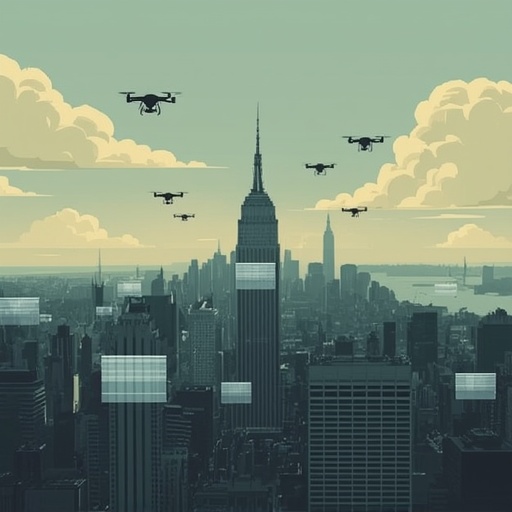
In a decisive escalation of its already restrictive stance toward the management of public information, Moscow has now enacted one of its most stringent communication bans to date—an order that effectively silences almost the entire spectrum of voices that might otherwise report or comment on the consequences of Ukrainian drone strikes within Russia’s borders. Under this newly enforced regulation, not only are private citizens prohibited from posting photographs, videos, or descriptions of the affected sites, but even official institutions that would typically act as sources of factual updates—such as emergency response agencies, municipal services, or other branches of local government—are expressly forbidden to share any information through social networks or online platforms.
The decree sharply narrows the channels through which the public can access reliable details about ongoing events, concentrating narrative authority solely in the hands of two entities: the Ministry of Defense and the office of the city’s mayor. These are now the only offices permitted to release statements, visual materials, or situational assessments dealing with the damage or aftermath of drone attacks. The measure represents not merely a bureaucratic adjustment but a deeper reinforcement of the government’s effort to centralize control over what is seen, said, and ultimately believed regarding the country’s wartime experiences.
Beyond its immediate operational effect, this information blockade has significant symbolic implications. It reflects the state’s deepening impulse to choreograph all aspects of public discourse—especially those related to national security, defense, and perceived external aggression. By confining official narratives to a select few, authorities are attempting to eliminate the risk of conflicting interpretations or spontaneous disclosures that might contradict the version of events sanctioned by the Kremlin. One might also interpret the move as part of a broader campaign intended to preserve public morale, restrict speculation, and maintain a sense of stability amid the ongoing volatility of the conflict.
In practice, the prohibition extends across digital ecosystems where eyewitness content has until now served as a vital tool for real-time documentation and transparency. Social media platforms, previously populated by firsthand footage, analyses, and local community alerts, will now display silence or official briefings alone. The suppression thereby alters the rhythm of digital information exchange: what once flowed freely from multiple sources is to be funneled through a single, government-defined conduit.
Analysts note that this step illustrates how Russia’s internal information policy continues to evolve from selective censorship toward systemic command of the narrative environment. Restricting communication about drone strike damage effectively obscures independent verification of events and curtails any spontaneous formation of public dialogue concerning the human, infrastructural, or emotional toll of such attacks. It signals that, in the state’s hierarchical view, unfiltered truth represents a form of vulnerability.
Ultimately, Moscow’s latest directive reinforces an unmistakable transformation in the nation’s media landscape: the transformation from pluralistic conversation to centralized pronouncement. Within this construct, the truth disseminated online is no longer a collective record derived from the many, but an official decree issued by the few. The new policy thus marks both the consolidation of de facto state information control and a reminder of the power dynamics that shape narrative sovereignty in wartime.
Sourse: https://www.businessinsider.com/moscow-bans-almost-everyone-from-posting-about-drone-strikes-2026-5