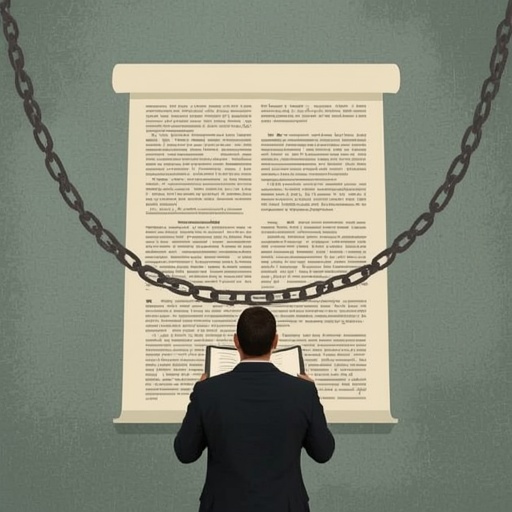
Have you ever truly paused before clicking that familiar little checkbox labeled “I agree”? Beneath that simple gesture—the momentary tap of a finger that grants permission and propels us toward convenience—lies a world of complex legal machinery that most consumers neither see nor understand. The innocuous fine print, sprawling across countless screens of text, has quietly evolved into one of corporate America’s most formidable instruments of control and silence. What once appeared as administrative routine has become a strategic tool that safeguards businesses from public scrutiny while diminishing the everyday citizen’s access to justice.
In our in-depth conversation with the founder of the Public Integrity Project, we uncover how corporations have mastered the art of transforming benign-sounding “Terms of Service” agreements into legally binding mechanisms that neutralize accountability. Central to this hidden architecture is the concept of **forced arbitration**, a clause buried deep within the digital contracts we accept without thought. Arbitration, on the surface, seems efficient—an alternative to the lengthy and costly public court system. Yet, as our discussion reveals, this efficiency often disguises a profound imbalance of power: disputes are relocated from open, transparent courtrooms into the closed chambers of private arbiters, most of whom operate under conditions that overwhelmingly favor corporations.
Imagine this: a customer discovers their data has been mishandled, or an employee faces discrimination after signing a mandatory agreement. Instead of being able to stand before a judge and jury, that individual finds themselves bound to a confidential process led by an arbitrator chosen or influenced by the very entity they are challenging. The outcome, more often than not, is final and unappealable. Such arrangements do not simply resolve conflicts—they reshape the very terrain of justice, shifting it away from public oversight toward corporate discretion.
The founder of the Public Integrity Project explains that this is not a coincidence but a deliberate design. Large companies, aware of the legal and reputational risks of open litigation, have steadily inserted arbitration clauses into everything from employment contracts to mobile app agreements. Consumers, desiring speed and functionality, unknowingly relinquish not only their capacity to contest unfair treatment in court but also the collective strength that class-action lawsuits once provided. Each click of “I agree” becomes an isolated nod of surrender, separating individuals from the power of community and precedent.
Through this calculated architecture, businesses have learned to convert what seems like user convenience into a shield of corporate immunity. They have taken advantage of society’s trust in technology—and its impatience—to engineer a culture of passive consent. What makes the situation even more disquieting is its opacity: these clauses rarely announce themselves clearly. Instead, they dwell in the dense labyrinth of legal prose, written to exhaust rather than enlighten. Few people question, let alone resist, the implications.
This trend echoes a broader transformation in modern commerce—one where **efficiency and automation** are prioritized over transparency and fairness. The privatization of justice through arbitration clauses means that vital questions about consumer rights, privacy violations, and workplace abuses are no longer resolved in public view. The cumulative effect is an erosion of accountability: when outcomes are hidden, patterns of corporate misconduct remain invisible. Society loses not only individual recourse but also the possibility of systemic reform, for injustice confined behind closed doors often multiplies unchecked.
Amid this landscape, the Public Integrity Project’s founder calls for a cultural awakening. It is not enough for policymakers or lawyers to intervene from above. Ordinary users must develop what might be termed **digital literacy with a conscience**—the ability to understand that the language of convenience can disguise coercion. Reading or at least questioning the fine print ceases to be a boring precaution; it becomes an act of civil responsibility. By understanding how arbitration restricts public accountability, individuals can advocate for transparency, support organizations that challenge unfair clauses, and demand legislative protections.
Ultimately, the issue extends beyond legal nuance—it touches the very concept of justice in an interconnected world. The fine print, once an administrative afterthought, now mediates the boundary between citizens and the systems that govern their rights. If left unchallenged, it risks transforming legal equality into a negotiation between convenience and control. The conversation with the Public Integrity Project sheds light on this urgent reality: that the path to fairness begins not in the courtroom but in awareness, vigilance, and the collective refusal to sign away our rights in the name of efficiency.
So the next time that small, unassuming box appears on your screen, consider it more than a gateway to an app or service. Consider it a silent contract between you and power itself—a contract that, if left unexamined, may bind more than your consent; it may bind your voice, your recourse, and your right to stand on equal footing before justice.
Sourse: https://www.theverge.com/podcast/930342/brendan-ballou-companies-courts-forced-arbitration-lawsuits-scalia