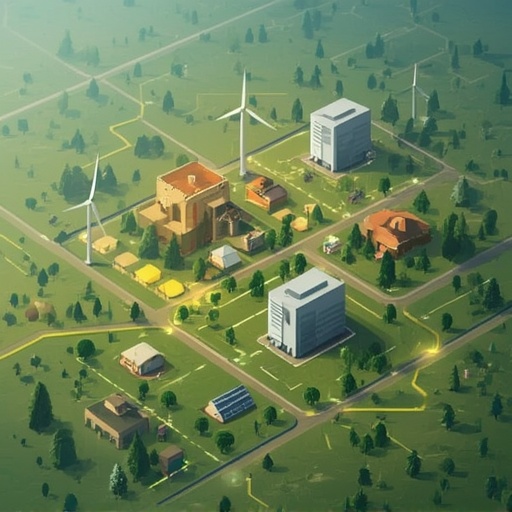
Across the modern world, enormous data centers—often housed in unassuming industrial buildings—are quietly transforming the nature of local communities. What appears from the outside to be a simple structure surrounded by high fences and humming machinery is, in fact, one of the beating hearts of our digital civilization. Inside its walls, vast networks of servers, fiber-optic connections, and cooling systems sustain everything from online searches and video calls to banking transactions and artificial intelligence applications. These facilities, though frequently hidden from public attention, shape both virtual and physical landscapes in fundamental ways.
Take The Dalles, Oregon, as a striking illustration of this invisible transformation. Once known primarily for its breathtaking scenery and longstanding connection to the Columbia River, this small community has become a pivotal hub of global technology infrastructure. Over the past decade, major technology corporations have been drawn to its abundant access to renewable power, favorable climate for efficient cooling, and available land for large-scale construction. Yet this influx of digital investment brings with it complex questions about transparency, sustainability, and community participation.
Residents, local officials, and scholars alike have begun to explore how these massive structures influence everything from water usage and energy consumption to local employment opportunities and environmental policy. The presence of data centers symbolizes progress and innovation, yet it simultaneously sparks debate over accountability and balance between economic benefit and ecological stewardship. How much should communities know about what happens inside these high-security campuses? What trade-offs arise when digital prosperity depends on local natural resources?
In essence, the story of The Dalles encapsulates a broader phenomenon taking place across the United States and around the globe. As society’s dependence on cloud computing and digital communication intensifies, more towns are becoming quiet hosts to the infrastructure that sustains our online lives. Each of these centers represents a node in the vast web that connects humanity, reflecting the tension between virtual convenience and the tangible realities of power, water, and land.
To understand the footprint of these technical marvels is to recognize that the internet is not an ethereal entity floating in cyberspace—it is deeply anchored in physical geography. Communities like The Dalles are learning that behind the seamless flow of emails, videos, and data streams lies a network of immense industrial operations, as vital to our era as factories were to the industrial revolution. The dialogue now unfolding between residents, corporations, and policymakers will determine whether this new digital infrastructure grows equitably, sustainably, and transparently. Only through this engagement can we map the invisible forces reshaping our neighborhoods and, ultimately, the modern world itself.
Sourse: https://www.theverge.com/policy/930629/data-center-policy-map-interactive