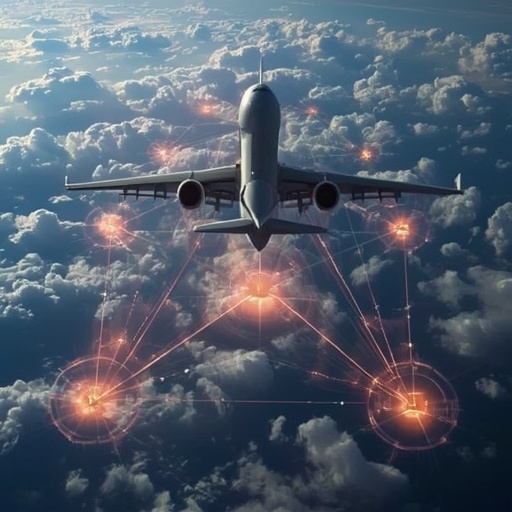
Delta Air Lines has officially announced its strategic decision to adopt Amazon’s constellation of Low Earth Orbit (LEO) satellites for its in-flight WiFi connectivity, signaling a profound transformation in the aviation technology landscape. This bold move, which intentionally diverges from the widely discussed Starlink solution, reflects Delta’s ambition to redefine the standards of onboard internet service by pursuing unprecedented speed, stability, and scalability for passengers traveling across global routes.
At the heart of this decision lies a broader contest between major technology enterprises striving for dominance in the sphere of next-generation satellite internet services. By aligning with Amazon’s rapidly developing LEO network, Delta illustrates a forward-thinking approach to enhancing the passenger experience, acknowledging that contemporary travelers demand seamless, high-bandwidth connectivity even while cruising at 35,000 feet. Reliable WiFi is no longer regarded as a luxury but as a crucial extension of modern digital life — essential for business productivity, entertainment streaming, and maintaining personal communication in real time.
This partnership emphasizes a deep technological convergence between aviation and cutting-edge communications infrastructure. Amazon’s LEO satellites operate closer to Earth than traditional geostationary networks, reducing latency and delivering faster data transfer rates. Such improvements promise a smoother and more responsive online experience for Delta’s customers, ensuring that browsing, video calls, and cloud-based activities can occur without the frustrating interruptions that once characterized in-flight connectivity.
From a competitive perspective, Delta’s decision has provoked robust debate across both the aerospace and telecommunications communities. The choice to collaborate with Amazon, instead of Starlink, not only diversifies the airline’s technological ecosystem but also reshapes expectations for industrial partnerships in the skies. It underscores a shift in strategy where airlines are no longer passive clients of legacy communication systems but active participants in the evolution of satellite-driven broadband.
In the coming years, passengers can anticipate a remarkable transformation in how they stay connected in flight. With Amazon’s infrastructure continuing to expand globally, Delta’s early adoption positions it as an innovator within commercial aviation, offering travelers a glimpse into the future of airborne digital engagement. This development marks more than a technical upgrade — it is a symbolic moment in the ongoing narrative of human connectivity, demonstrating how advancements in orbital technology are closing the gap between earthbound networks and the boundless skies above.
Sourse: https://www.businessinsider.com/delta-air-lines-starlink-elon-musk-not-happy-2026-5