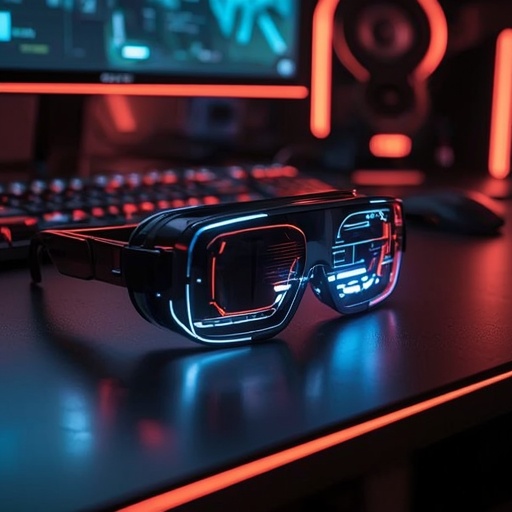
At the moment, the wearable technology market is teeming with an abundance of smart glasses, many of which serve as sophisticated display devices. These contemporary display glasses essentially function as portable, face-mounted monitors, projecting vivid digital interfaces directly before a user’s eyes. Among the manufacturers leading this niche sector, Xreal has developed a strong reputation by offering several iterations of such innovative eyewear. Now, in collaboration with Asus, the company is launching a new model known as the ROG Xreal R1, scheduled to begin rolling out in June. What distinguishes these glasses most prominently is their remarkably high refresh rate, which surpasses all comparable display glasses currently on the market. However, this impressive technological enhancement is accompanied by a noticeably higher price tag, positioning the ROG Xreal R1 as a premium, enthusiast-level option rather than a mainstream accessory.
When I tested the ROG Xreal R1 earlier this year, in January, my impressions were a blend of familiarity and refinement. The glasses bear a distinct visual identity characterized by a luminous, performance-oriented aesthetic often described as having a modern ‘gamer’ style—subtle yet deliberate in its glowing accents. Beneath this stylish design, they function primarily as a more sophisticated, fine-tuned evolution of Xreal’s previous One Pro model, bundled together with an accessory that notably expands their functionality: a console-switching dock. This inclusion exemplifies Asus and Xreal’s focus on versatility and multi-platform convenience. The R1’s defining technological hallmark, however, lies in its micro-OLED display, which achieves an extraordinary refresh rate of 240Hz—double the rate found in most current competitors, which typically max out at 120Hz. This numerical leap translates to far smoother motion rendering, enhanced visual fluidity, and a less perceptible delay between user input and on-screen action.
However, maintaining such an ultrafast refresh rate demands appropriate hardware support. To unlock the ROG Xreal R1’s full potential, the glasses must be tethered to the specialized ROG Control Dock—a companion device engineered to handle high-bandwidth video inputs. This dock incorporates two HDMI 2.0 ports alongside a DisplayPort 1.4 connection, enabling seamless switching between multiple input sources without requiring the user to remove or readjust the glasses. As a result, gamers and professionals alike can transition effortlessly between a PC and various gaming consoles, maximizing convenience during use sessions that involve multiple devices or customized setups.
When comparing the ROG Xreal R1 to my current top choice in display glasses, the Viture Beast, the contrasts become quite revealing. The Viture Beast model boasts a superior resolution of 1,920 by 1,200 pixels, surpassing the ROG Xreal R1’s resolution of 1,920 by 1,080. Additionally, it delivers a considerably brighter image, reaching luminance levels above the R1’s limit of 700 nits. These attributes provide more vivid colors and sharper visual definition, especially in environments with strong ambient lighting. Furthermore, the Viture Beast is offered at a notably lower cost, $549, though it does not include the specialized console-switching dock that accompanies the R1. By comparison, Xreal’s own One Pro glasses are priced at $599, and given the similarity in core specifications between the One Pro and the R1, it becomes clear that the integrated dock accounts for nearly $250 of the total package cost.
Despite the R1’s higher cost, it does share several premium features familiar to Xreal’s earlier product lines. These include Bose-engineered audio components that deliver balanced, high-fidelity sound, as well as advanced display stabilization technology that allows users to virtually ‘pin’ a floating monitor in space—keeping the image fixed in position even as one moves their head. The device also incorporates dimming electrochromic lenses and refined anti-glare inner optics, both of which enhance comfort and visibility across diverse lighting conditions.
Even with all these features, I personally find myself wishing that the ROG Xreal R1 offered a more expansive field of view or a bump in resolution, which would have further elevated the sense of immersion. At present, the field of view remains at 57 degrees—the same as the One Pro. Yet the horizon of wearable display innovation continues to expand rapidly. Xreal’s upcoming Project Aura, for instance, promises a 70-degree field of view and forms part of a broader mixed-reality computing system developed in partnership with Google. Though details on pricing remain undisclosed, it illustrates how this field continues evolving toward greater visual depth and interactive potential.
Considering current economic conditions, this latest high-end offering may be a difficult investment for many prospective buyers. Nevertheless, for those who have long envisioned experiencing the smoothness and visual precision of a 240Hz refresh rate delivered through wearable display technology, the ROG Xreal R1 represents exactly that aspiration brought to life—a rare combination of innovation, aesthetics, and engineering ambition designed for the most discerning tech enthusiasts and gamers.
Sourse: https://www.cnet.com/tech/gaming/asus-and-xreals-849-gaming-display-glasses-are-available-for-preorder/