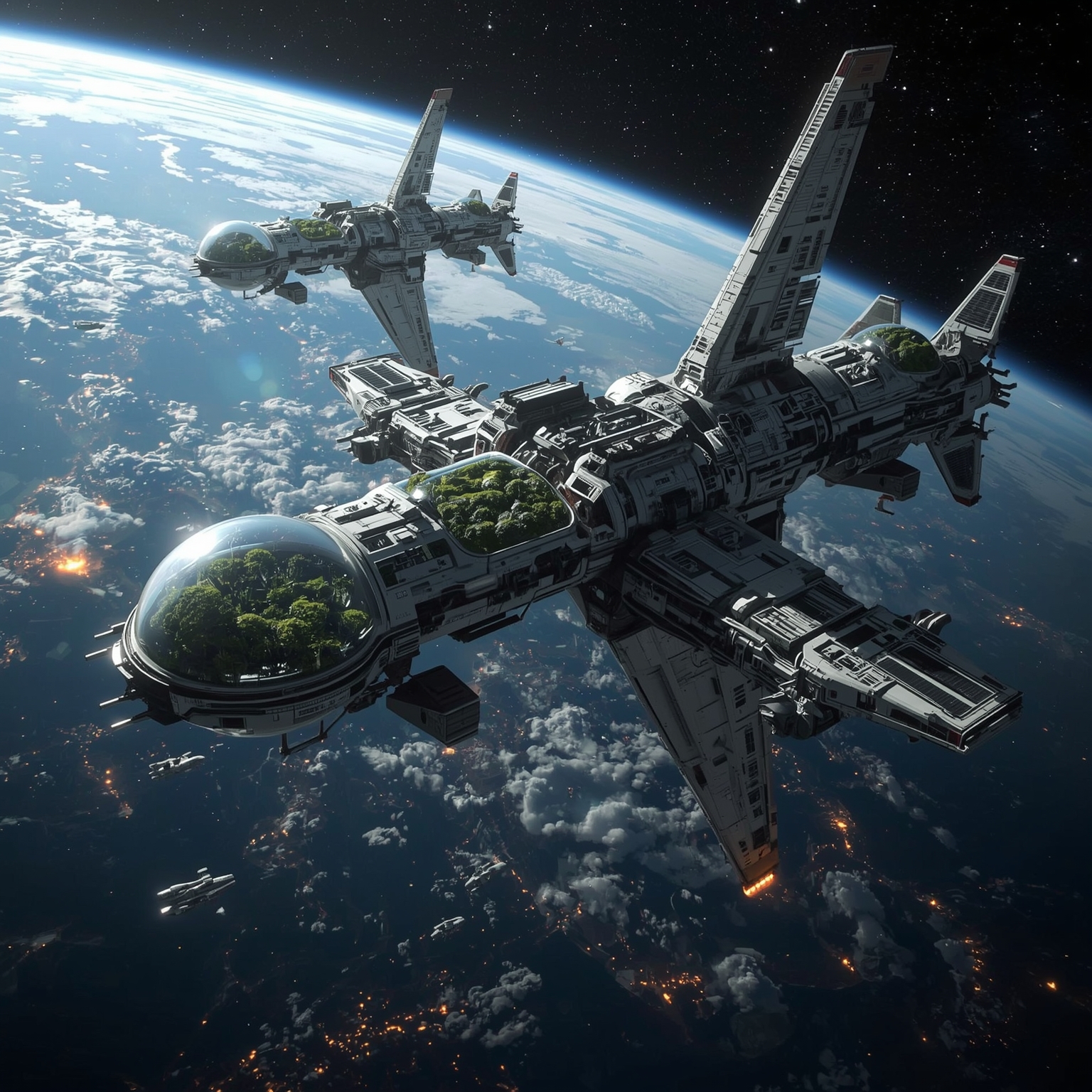
Amazon’s founder and visionary entrepreneur Jeff Bezos made an uncommon yet highly anticipated public appearance during Italian Tech Week, held in the historic city of Turin on Friday. According to the Financial Times, Bezos used this moment to share an ambitious projection: he foresees a future, unfolding over the next several decades, in which millions of human beings will not merely visit outer space but will actually reside there as part of a thriving, self-sustaining society. His presence at the event—one of the few occasions in recent years that he has appeared before a live audience—offered a rare glimpse into his perspective on the destiny of humanity beyond Earth.
In a conversation with John Elkann, a prominent member of Italy’s distinguished Agnelli family and a leading figure in global industry, Bezos elaborated on his spacefaring vision. As the founder of both Amazon and the aerospace company Blue Origin, he drew upon his extensive technological and entrepreneurial experience to assert that future space settlements would emerge largely because people would **choose** to live among the stars, not out of necessity. He proposed that this voluntary migration would represent a new chapter in human aspiration. According to Bezos, rather than engaging in difficult or tedious manual labor, people living in orbit or on celestial habitats would rely heavily on robotics and automation. Sophisticated machines, working tirelessly, would perform the strenuous physical tasks, while massive artificial intelligence–driven data centers—floating weightlessly in space—would power the digital infrastructure of these new communities.
To many observers, Bezos’s pronouncement echoed the competitive spirit that has long characterized his relationship with fellow space magnate Elon Musk. Musk, through SpaceX, has for years articulated his own grand vision of establishing a human colony on Mars, projecting that by the year 2050 as many as one million people could inhabit the Red Planet. This timeline, practically at the doorstep of the mid-century, underscores the proximity of dreams once dismissed as science fiction. Bezos’s remarks, therefore, can be read as part philosophical reflection, part strategic statement—perhaps even an attempt to outpace or intellectually challenge his chief rival’s celestial ambitions. To skeptics, these grand projections from billionaires with seemingly limitless resources may suggest a growing detachment from terrestrial realities. Yet to others, their visions might imply that they possess insights or technological foresight inaccessible to those of us whose imaginations are still tethered to the real estate maps of Earth.
Beyond his space-related commentary, Bezos offered an equally assertive perspective on another transformative field: artificial intelligence. Addressing widespread speculation about whether AI’s booming investment cycle resembles previous speculative bubbles, he argued that this surge of funding activity represents the **right kind** of bubble—a constructive, “industrial” one, grounded in innovation, technological progress, and the building of enduring infrastructure, rather than a fleeting “financial” bubble driven merely by speculation and investor exuberance. His defense of the AI revolution positioned it as a world-altering force that, rather than threatening human progress, could serve as a foundation for unprecedented creativity and productivity.
Bezos concluded his remarks on an unmistakably optimistic note, declaring that there has rarely—if ever—been a more exciting or promising period to be alive and looking toward the future. While the audience in Turin may have responded with a mix of wonder, curiosity, and possibly skeptical glances—at least in the theater of our imagination—the tone of the evening was one of audacious confidence. It reflected Bezos’s enduring conviction that human innovation, powered by technology and guided by unrelenting ambition, is inevitably steering us toward a destiny that transcends the boundaries of our planet.
Sourse: https://techcrunch.com/2025/10/03/bezos-predicts-that-millions-will-live-in-space-kind-of-soon/