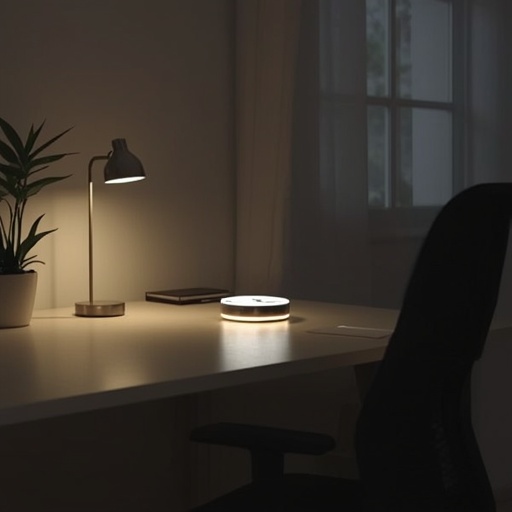
In an age where nearly every aspect of life is connected to data, networks, and constant notifications, the existence of a wellness gadget that functions entirely offline feels almost revolutionary. Deep Care’s newest posture device takes a radically thoughtful approach to digital wellbeing by offering real-time assistance without relying on smart apps, Wi-Fi synchronization, or constant data sharing. Instead of another gadget competing for your attention, it chooses simplicity and intentionality, urging users to reconnect with their own physical awareness through subtle, meaningful feedback.
At a price of $350, this posture corrector positions itself firmly within the premium wellness category. However, for many who spend long hours bent over keyboards, craning their necks toward laptop screens, or slouching through endless virtual meetings, the cost could be seen not as an indulgence but as an investment in long-term health. The value of comfort and spinal alignment may be intangible, yet it manifests every day in reduced fatigue, fewer headaches, and better breathing—the quiet dividends of standing straighter and moving with awareness.
What truly distinguishes this device is not just the technology but the philosophy behind it. In a tech ecosystem fuelled by data-driven optimization, Deep Care’s gadget is something of an anomaly. With no app companion, no external connectivity, and no cloud storage, it embodies a form of mindful tech—technology designed not to dominate your attention but to discreetly assist you. The device delivers immediate physical feedback when you begin to slouch or deviate from healthy posture, creating a direct and personal feedback loop between your body and the product itself. In a world of notifications, it’s a rare gesture toward tactile presence.
Imagine sitting at your desk during a long day of remote work. Instead of a phone alert or buzzing watch interrupting your concentration, the device offers a gentle nudge—a silent reminder to readjust, lift your shoulders, lengthen your spine. Over time, these subtle cues cultivate intuitive awareness, training your body to recognize correct alignment naturally. It’s a process not unlike mindful breathing or meditation: gradual, repetitive, and deeply personal.
The absence of an app also means the absence of digital distractions. There’s no progress chart to obsess over, no performance metrics to compare, no algorithm analyzing your habits. Your posture becomes your only measure of success. In this sense, the device aligns with the growing movement toward mindful technology, where simplicity, privacy, and focus are valued as much as innovation.
Aesthetically, the design echoes this minimalist philosophy. Its sleek and compact form integrates seamlessly into a variety of environments, from corporate offices to home workspaces. Neutral tones and ergonomic proportions make it visually unobtrusive, yet its material quality and subtle illumination lend a sophisticated touch that feels both contemporary and practical.
Still, the price invites reflection. For some, $350 may appear steep for a device that performs a seemingly straightforward task. Yet the cost perhaps lies not in its mechanical complexity but in its promise: freedom from dependency on screens. In resisting the expectation that every modern product must be smart, connected, and data-enabled, this gadget redefines what “smart” truly means. Smart, in this context, may not involve connectivity but consciousness; not external optimization but internal alignment.
Ultimately, Deep Care’s offline posture gadget symbolizes a gentle rebellion against over-digitization. It reminds us that wellness technology need not exist in the cloud to be effective—that sometimes the best innovation is found in subtraction rather than addition. For those seeking balance in an overstimulated world, it offers a quiet, thoughtful way to improve physical wellbeing without inviting another stream of notifications into daily life. It is not just a tool to correct how we sit—it may well be a lesson in how we live, move, and refocus our attention on the physical self amid an age of digital overwhelm.
Sourse: https://techcrunch.com/2026/05/16/the-offline-desk-gadget-that-actually-got-me-to-sit-up-straight/


