For more than a decade, the American bourbon industry stood as a symbol of revitalized craftsmanship and unbridled consumer enthusiasm. Whiskey aficionados, collectors, and casual drinkers alike turned small-batch and heritage labels into status symbols, fueling an unprecedented surge in demand. Distilleries, encouraged by this seemingly endless appetite, responded by expanding operations, aging more barrels, and investing heavily in new facilities to meet future expectations. However, the once sky-high optimism that defined the bourbon renaissance is now giving way to a sobering reality—both figuratively and literally.
Over the past few years, a growing cultural movement toward moderation, mindfulness, and wellness has begun to reshape the way Americans think about alcohol consumption. The so-called sober-curious lifestyle, once a fringe concept, has entered mainstream conversation. Consumers are examining not only the physiological effects of drinking, but also its social and economic implications. New product categories, such as non-alcoholic spirits, low-ABV cocktails, and alcohol-free social spaces, have materialized in response to this shift, and traditional distillers are realizing that their former growth models no longer align with evolving taste preferences.
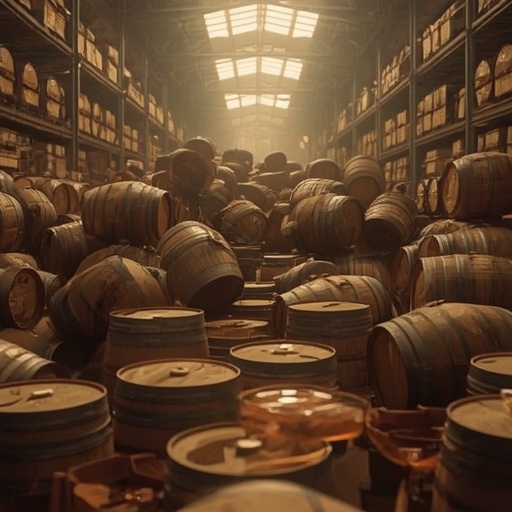
Within this changing landscape, many bourbon producers find themselves facing a paradox of abundance. Warehouses that once symbolized prosperity now brim with unsold barrels, each representing a sunk cost of time, resources, and capital. Because bourbon must age for years before it reaches the market, the supply produced during the height of the boom is only now reaching maturity—just as demand is beginning to wane. The result is an oversaturated market, where near-record inventories clash with cautious buyers and distributors. Some brands are exploring price adjustments or creative marketing angles to recapture attention, while others are revisiting production forecasts in an urgent attempt to stabilize balance sheets.
This sudden correction extends far beyond bourbon alone. It is rippling through the broader alcoholic beverage sector, prompting investors, marketers, and supply-chain managers to reassess entire operational models. Traditional strategies that once prioritized volume growth are being replaced by approaches emphasizing brand differentiation, sustainability, and consumer connection. The focus has shifted from merely selling more bottles to inspiring authentic experiences that resonate with a health-conscious, self-aware generation.
Ultimately, the bourbon glut exemplifies a pivotal transformation in contemporary drinking culture. What was once celebrated as a golden era of distilling prowess has evolved into a complex story about adaptation and resilience. Producers must now navigate not only the material problem of excess inventory but also the cultural challenge of relevance in a marketplace redefined by introspection and restraint. The rise of the sober-curious mindset is forcing Big Booze to confront its limitations, rethink its messaging, and rediscover what it means to thrive in an era where indulgence must coexist with intentionality. In this delicate balance between tradition and transformation, the next chapter of America’s bourbon story is already being written.
Sourse: https://www.wsj.com/business/retail/bourbon-glut-kentucky-b14a9201?mod=pls_whats_news_us_business_f