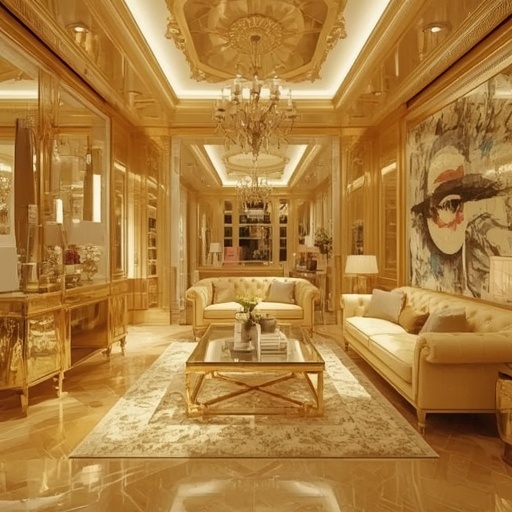
Over the last few years, the concept of luxury has undergone a profound transformation. What was once defined by restraint, refinement, and subtlety—the ethos often described as ‘quiet luxury’—is now giving way to a far louder, more demonstrative expression of wealth. The understated elegance of muted tones, minimalist design, and hidden symbols of affluence is being replaced by a new wave of confidence, spectacle, and showmanship. This evolution does not merely reflect changes in fashion or interior aesthetics; it mirrors deeper cultural and economic shifts that have reshaped how prosperity and prestige are communicated in the modern age.
In the era of quiet luxury, affluence was coded rather than declared. Discerning individuals opted for the kind of sophistication that only those ‘in the know’ could recognize—cashmere coats with no logos, tailored cuts, and discreet craftsmanship that spoke of quality more than cost. But the pendulum has swung dramatically in the opposite direction. Today’s generation of wealth holders—especially younger elites and digital tastemakers—prefer visibility to subtlety. Social influence, rather than private exclusivity, defines modern success. The emphasis is on being noticed, admired, and emulated. Visibility itself has become currency.
From gleaming gold accents in architecture to high-gloss couture dripping with embellishment, loud luxury celebrates audacity. It thrives on sensory impact, on the opulence that demands attention rather than serenity. The modern affluent individual wants their lifestyle to glimmer—metallic interiors, sculptural jewelry, bespoke cars, and immersive experiences that blur the line between performance and possession. It’s not excess for excess’s sake, but rather an expression of unapologetic self-definition, where identity and wealth intertwine without the pretense of modesty.
This pivot also reflects globalization and digital transparency. In an interconnected world of social media and constant visibility, the value of status symbols has shifted from exclusivity to shareability. Where once a private dinner in a discreet Michelin-starred restaurant symbolized refinement, now a panoramic rooftop experience posted online projects influence more effectively. Luxury brands, tuned into this psychology, have recalibrated their strategies to meet a consumer base that demands boldness, spectacle, and storytelling.
However, this transformation raises intriguing questions for businesses and brand strategists. How can designers, artisans, and marketers maintain authenticity in a landscape that rewards grandeur? Can the gleam of loud wealth coexist with the craftsmanship and ethics once cherished by quiet luxury? As sustainability, economic disparity, and digital transparency grow increasingly urgent, the conversation surrounding opulence becomes more complex—and more revealing.
Yet, beyond the analysis lies a simple truth: cultural aesthetics evolve in rhythm with social confidence. Loud luxury is not just a design trend—it is a manifestation of a world that wants to be seen, celebrated, and remembered. Today’s prosperity is not whispered in silk but broadcast in gold. And for better or worse, quiet luxury has officially left the stage.
Sourse: https://www.businessinsider.com/quiet-luxury-loud-tacky-wealth-america-2026-5