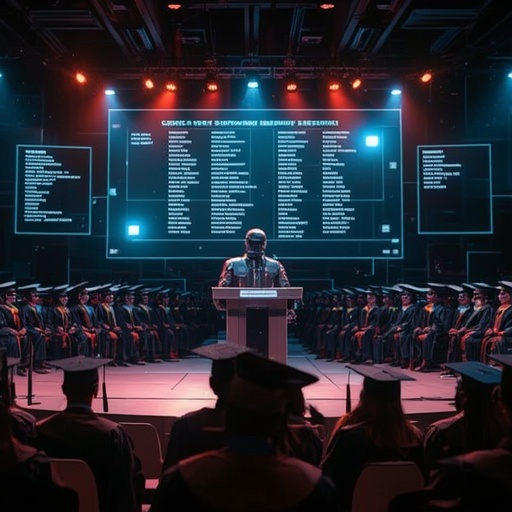
In an era increasingly defined by technological integration, even the most symbolic and emotionally charged human rituals are being touched by automation. A recent incident at a graduation ceremony—where an AI system designed to read aloud students’ names faltered—beautifully yet poignantly illustrates both the aspirations and limitations of artificial intelligence in deeply personal contexts. The machine, intended to display efficiency and precision, stumbled in one of the most cherished parts of the event: the calling of each graduate’s name. Missed pronunciations, truncated moments, and the awkward silence that followed each error collectively reminded everyone present that technology, despite its sophistication, still lacks an innate sense of empathy and human understanding.
Graduation ceremonies are more than formal gatherings; they are carefully orchestrated celebrations meant to honor years of perseverance and identity. Each name spoken aloud represents a unique story—of late nights studying, of familial sacrifices, of personal triumph over challenge. When an automated voice fails to capture the rhythm or essence of a name, the malfunction extends beyond mere technical error; it becomes a breach in the ritual’s emotional integrity. This episode underscores a necessary conversation about the appropriate boundaries of automation.
As AI continues to weave itself through the fabric of education and professional life, we must distinguish between tasks where digital precision enhances efficiency and moments where human warmth is irreplaceable. Algorithms can analyze data, predict trends, or streamline logistics, but they cannot replicate the resonance that arises when a person calls another by name with genuine recognition and respect. Even as we celebrate the progress of machine learning and synthetic voices, there remains a universal desire for authenticity—a yearning for connection that technology cannot fully simulate.
The AI announcer’s missteps thus serve as both a cautionary tale and an invitation to reflect. Automation should not be abandoned, but rather implemented with discernment. Human oversight, empathy, and context-awareness must remain integral to the design and deployment of such systems. True innovation is not found in replacing the human touch, but in ensuring that technology amplifies, rather than erases, the very qualities that make experiences meaningful.
In the end, this incident reminds us that the march of progress must be guided by wisdom as much as by innovation. Not every task—especially those involving identity, acknowledgment, and emotion—should be surrendered entirely to machines. Sometimes, the irreplaceable value of a moment lies precisely in its human imperfections. 🎓🤖
Sourse: https://www.theverge.com/tech/933653/ai-graduation-commencement-glendale-community-college