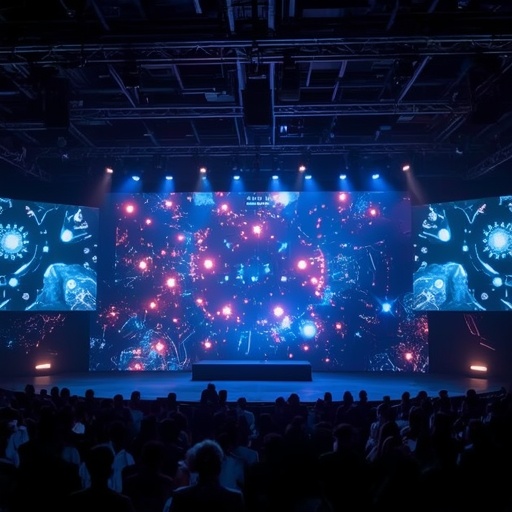
The 2026 edition of Google I/O unfolded as far more than a typical product showcase—it felt like a defining waypoint in humanity’s accelerating journey toward the age of artificial intelligence. Across every keynote and demo, a palpable shift became evident: Google isn’t just refining its algorithms or designing smarter devices; it is laying the foundation for a future that could fundamentally reshape how intelligence itself operates in the digital world.
At the heart of that transformation were two astonishing generative systems—**Spark** and **Gemini**—presented not simply as incremental updates but as groundbreaking evolutions in how machines learn, reason, and create. Spark, the company’s latest adaptive AI model, demonstrated an unprecedented capacity for contextual awareness, enabling hyper-personalized human–computer interactions that seem almost intuitive. Meanwhile, Gemini built upon the foundations of multimodal understanding, achieving fluid synthesis across text, voice, image, and code. In hands-on demos, it exhibited near-human fluency in collaborative problem-solving, creative brainstorming, and code generation—all autonomously adapting to user tone and intent.
But perhaps the most thought-provoking aspect of this year’s conference came when **Demis Hassabis**, CEO of DeepMind, turned the conversation toward the long-term ethical and existential implications of advanced AI. Speaking with characteristic clarity, he framed today’s AI revolution as the threshold to what some have termed the *technological singularity*—a hypothetical moment when machine cognition surpasses and accelerates beyond the boundaries of human understanding. While Hassabis tempered the excitement with cautious optimism, he underscored the importance of embedding moral frameworks and scientific stewardship into every layer of AI development.
Beyond these visionary discussions, Google I/O 2026 emphasized its commitment to democratizing access to AI development tools. Spark and Gemini were both unveiled with extensive APIs and developer kits designed to empower creators, educators, and enterprises. The intent is clear: the company aims not to monopolize intelligence but to distribute it—to enable a broader ecosystem of invention. Sessions on sustainable data infrastructure and edge-based AI deployment further strengthened the theme of inclusivity and ethical responsibility.
In summation, the conference served as a vivid reminder that artificial intelligence is no longer confined to labs or speculative fiction; it is becoming the grammar of tomorrow’s innovation. From the practical to the philosophical, Google I/O 2026 captured the tension and promise of our era—a world on the cusp of merging biological creativity with digital cognition. As Spark and Gemini blaze across the horizon of possibility, this year’s I/O will be remembered as the moment when humanity collectively glimpsed the architecture of its intelligent future.
Sourse: https://www.businessinsider.com/google-io-2026-5-biggest-takeaways-ai-advances-2026-5