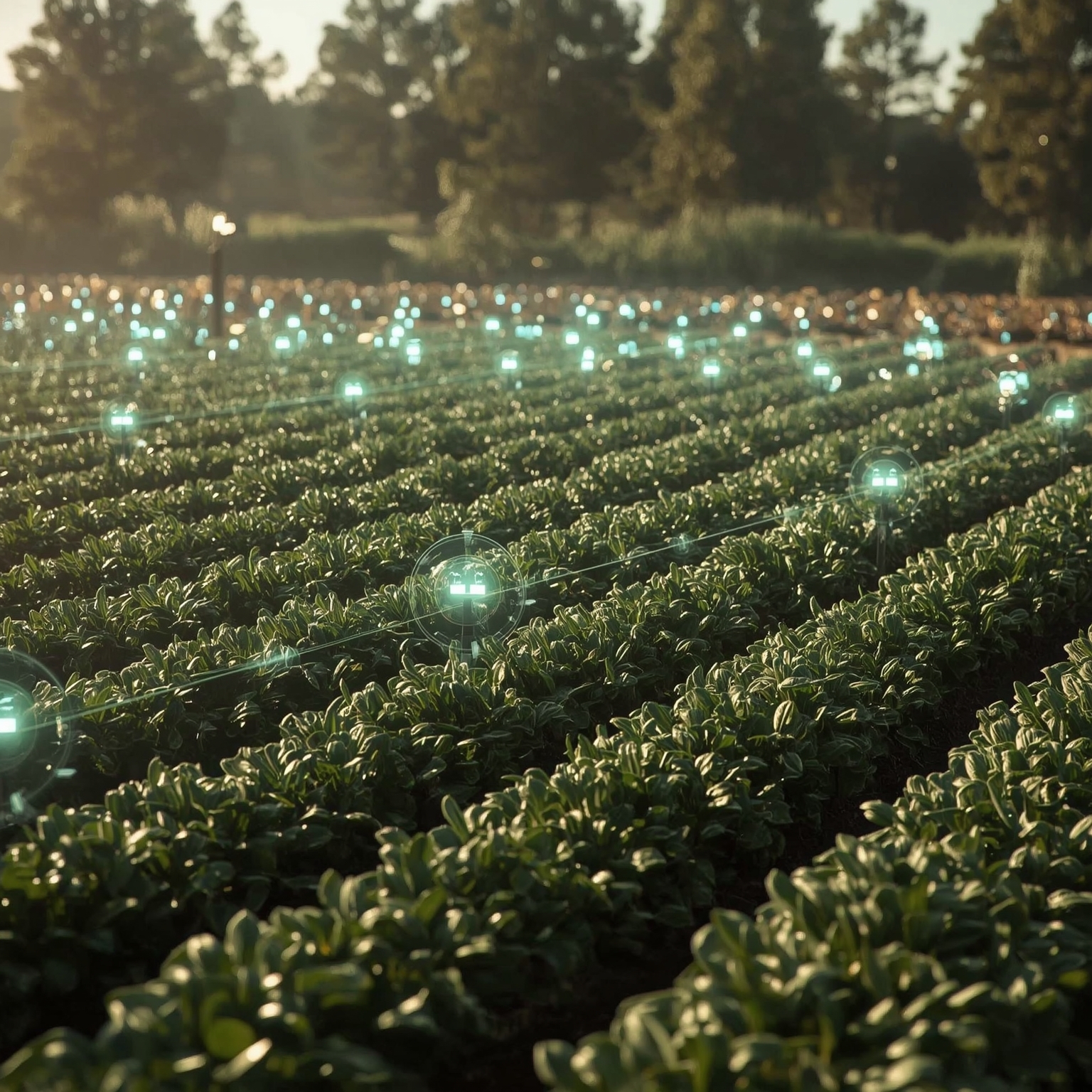
Agriculture stands among the most water-dependent sectors on Earth, consuming roughly seventy percent of all freshwater extracted for human use across the globe. In nations such as India or Chile—where large portions of the population rely heavily on farming for economic survival—this figure can exceed ninety percent, illustrating just how critical and strained water resources have become. For individuals like Mario Bustamante, a Chilean entrepreneur and innovator deeply rooted in agricultural landscapes, this crisis is not merely an abstract statistic but an everyday reality that influences how food is grown and how communities sustain themselves. As he explained in an interview with TechCrunch, the shortage of water has evolved into a pressing challenge that shapes the livelihoods of countless farmers and demands urgent technological intervention.
Bustamante envisions that artificial intelligence, with its capacity for rapid analysis and pattern recognition, could dramatically reduce water consumption on farms throughout the world. His venture, Instacrops, originally began as a company specializing in the deployment of Internet-of-Things (IoT) sensors designed to alert farmers of environmental threats such as frost damage—a common peril that can devastate crops overnight. However, as the market for hardware evolved and sensors became increasingly commoditized and inexpensive, the company strategically shifted its priorities, reorienting toward software innovation and the optimization of water usage through intelligent data analysis.
Today, Instacrops’ technological ecosystem operates on 260 farms, where it has already demonstrated significant results: helping agricultural producers decrease their water consumption by up to thirty percent while simultaneously increasing crop productivity by as much as twenty percent. The startup will soon be featured as a participant in Startup Battlefield and prepare to present its work before a global audience at TechCrunch Disrupt, scheduled later this month in San Francisco—a platform renowned for showcasing transformative emerging technologies.
This transition from a hardware-centric model to one driven by artificial intelligence fundamentally redefined the company’s operational structure. The shift allowed Instacrops to streamline its workforce while achieving an exponential increase in the volume of data it can process. Bustamante revealed that the firm now handles approximately fifteen million data points every hour—an extraordinary leap, considering that a decade ago a comparable quantity of information might have represented an entire year’s worth of data. Through this evolution, Instacrops has not only reduced operational costs and staffing requirements but also managed to amplify its environmental and financial impact, achieving more with fewer resources.
The company’s system is designed for adaptability: it can either deploy new IoT sensors directly onto farms or integrate seamlessly with an existing sensor network already in place. Once connected, Instacrops collects and synthesizes complex streams of environmental information—ranging from soil moisture levels, humidity, ambient temperature, and atmospheric pressure to crop yields and NDVI, a vegetation index derived from satellite imagery that measures plant health and photosynthetic activity. The startup’s large language models process more than eighty such parameters, providing actionable insights that help farmers determine the right moments and methods for irrigating specific plots of land.
These carefully curated recommendations are then communicated directly to farmers via mobile applications. Instacrops offers its own chatbot-based app but also integrates with widely adopted platforms such as WhatsApp—a decision driven by practicality and accessibility. As Bustamante noted, he envisions that within the coming year the company will rely entirely on WhatsApp, which serves as an almost universal communication tool among farmers regardless of geographic region or technical familiarity.
For farms equipped with more advanced technological infrastructure, Instacrops’ platform is even capable of controlling irrigation systems autonomously, enabling precision watering without constant human input. The company concentrates predominantly on high-value crops cultivated throughout Latin America—such as apples, avocados, blueberries, almonds, and cherries—where efficient water management can yield substantial financial and ecological benefits. Farmers contract the service by paying an annual subscription fee calculated per hectare of farmland, granting them full access to the startup’s real-time irrigation optimization data and expertise.
Instacrops’ journey includes its participation in Y Combinator’s summer 2021 cohort, a highly selective accelerator known for nurturing some of the world’s most influential startups. It has since attracted financial backing from notable investors including SVG Ventures and Genesis Ventures, both of which recognize the potential of technology-driven sustainability in reshaping global agriculture.
Those eager to witness Instacrops’ innovation firsthand, along with a multitude of other pioneering startups, will have the opportunity to do so at TechCrunch Disrupt—taking place from October 27 to 29, 2025, in San Francisco. The event promises to serve as a vibrant forum for the exchange of groundbreaking ideas at the intersection of technology, sustainability, and the future of food production.
Sourse: https://techcrunch.com/2025/10/04/instacrops-will-demo-its-water-saving-crop-boosting-ai-at-techcrunch-disrupt-2025/


