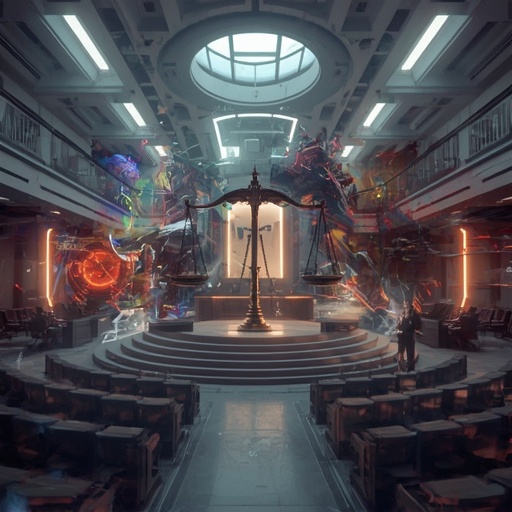
In the ever-evolving landscape of global technology, a new and formidable frontier has emerged—one not defined merely by the tangible boundaries of hardware or the intricate frameworks of software, but by the far more elusive and dynamic essence of intelligence itself. This frontier, characterized by the rapid expansion of artificial intelligence, represents the latest and most transformative chapter in the saga of innovation. Across the world’s most powerful technology corporations, an intense and unprecedented race is underway, driven by the ambition to harness, refine, and ultimately define the next generation of AI capabilities. Each organization, propelled by vast resources and visionary ambition, seeks to cement its position as the architect of an AI-driven future that will fundamentally reshape industries, economies, and even the very fabric of human interaction.
Unlike previous technological revolutions—such as the advent of personal computing, the explosion of the internet, or the proliferation of cloud technology—this particular transformation transcends the tools we use and reaches deep into the cognitive processes that guide how we work, communicate, and innovate. The implications are profound: artificial intelligence no longer functions merely as an auxiliary system but as an increasingly autonomous entity capable of decision-making, creative reasoning, and complex pattern recognition. Consequently, the debate has shifted from *whether* AI will alter modern civilization to *who* will possess the ingenuity, ethical foresight, and infrastructural capability to lead this seismic change.
Consider, for instance, the expansive strategies of the major industry players. Each has adopted a unique yet converging approach: integrating intelligent algorithms into consumer ecosystems, revolutionizing automation within enterprise networks, and developing platforms capable of self-learning adaptation. These concerted efforts are not confined to laboratories or theoretical constructs—they are actively reshaping tangible aspects of daily life, from how we navigate digital environments to how global businesses streamline operations and deliver tailored user experiences. Yet, beneath this momentum lies a deeper question of stewardship. As artificial intelligence continues to expand into every conceivable domain—healthcare, education, transport, and finance among them—the challenge will not simply be achieving technological supremacy, but guiding this power toward sustainable and human-centered outcomes.
The ongoing quest for AI dominance, therefore, represents far more than a competition among corporations; it embodies a defining moment in human evolution. Intelligence, once viewed as an exclusively biological construct, is now becoming a shared frontier between man and machine. As innovation accelerates, ethical considerations, governance frameworks, and global collaboration will determine whether this new age of intelligence ushers in an era of augmented creativity and progress, or one of disruptive imbalance. The future, already taking shape before our eyes, calls upon leaders, technologists, and thinkers alike to engage in visionary dialogue and bold experimentation. The race to define the next generation of artificial intelligence is not merely about discovering new technologies—it is, in essence, about redefining what it means to be intelligent in the modern world.
Sourse: https://www.businessinsider.com/spacex-openai-ipo-meta-layoffs-musk-altman-anthropic-2026-5