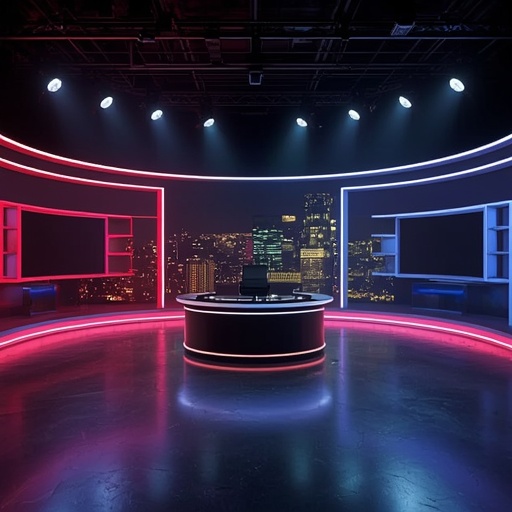
The landscape of celebrity communication is undergoing a profound transformation, marking the close of one storied era and the dawn of another defined by innovation, immediacy, and authenticity. The familiar glamour of late-night talk shows—their velvet chairs, dazzling lights, and carefully scripted charm—is gradually yielding its cultural power to a new frontier where creators shape the narrative from their own rooms, using nothing more than a camera, a smartphone, or a ring light.
This shift is not merely technological; it represents a philosophical reimagining of connection. Traditional talk shows, once the exclusive stage for celebrity storytelling, were constructed around a spectacle of refinement and control. Every gesture, every anecdote, and every laugh was subtly choreographed to maintain the allure of stardom. In contrast, the digital age dismantles that barrier, offering conversations that feel unscripted, imperfect, and profoundly human. Creators and influencers have cultivated spaces where familiarity replaces distance—where the interviewer and the guest seem like peers rather than performer and spectator.
Authenticity has become the new currency of influence. Modern audiences, accustomed to transparency and immediacy, seek moments that feel real rather than rehearsed. Platforms like YouTube, TikTok, and podcasts have democratized the discourse, enabling voices once absent from mainstream media to reach and resonate with millions. A conversation broadcast from a bedroom can now carry as much emotional weight—and sometimes far greater social impact—as a late-night segment viewed by millions. The essence of fame itself is evolving: it is no longer bestowed by networks but earned through honesty and relatability.
What we are witnessing, then, is not the disappearance of the celebrity interview but its metamorphosis. The art of conversation has moved from polished stages to dynamic digital ecosystems, from the comfort of living-room television to the intimacy of a hand-held screen. This transition blurs the boundaries between star and audience, interviewer and community, making participation an integral part of storytelling. The lights are dimmer, the production leaner, yet the connection runs deeper.
In this new era of unfiltered dialogue, storytelling becomes a shared act rather than a performed one. The media landscape is no longer about who holds the microphone but about how authentically they choose to use it. The evolution from talk show to TikTok is not simply a matter of form—it is a cultural realignment that redefines what it means to listen, to speak, and to be seen in the age of the creator.
Sourse: https://www.businessinsider.com/stephen-colbert-late-show-last-episode-celebrity-interviews-2026-5