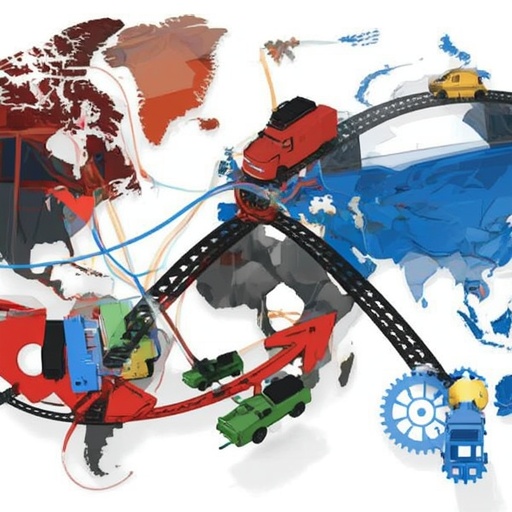
In a fiery and uncompromising statement, the United Auto Workers (UAW) President has publicly condemned the 2020 U.S.-Mexico-Canada trade agreement, referring to it as a ‘free-trade disaster’ that undermines the stability and dignity of American labor. This forceful critique has reignited an extensive national conversation surrounding international trade policy, economic sovereignty, and the future of domestic manufacturing in an era defined by automation, outsourcing, and interdependent global supply chains.
At the heart of this debate lies a fundamental question about economic justice and national priorities: to what extent should trade agreements serve the interests of corporate efficiency and market expansion, and how far should they go in safeguarding the rights and livelihoods of the workers who sustain industrial production? According to union representatives, deals like the U.S.-Mexico-Canada agreement often tilt the economic balance in favor of transnational conglomerates by facilitating lower production costs abroad, thereby diminishing the leverage and job security of the American workforce. The UAW and its supporters argue that such arrangements effectively dilute hard-won labor protections, encourage wage suppression, and accelerate the offshoring of once-thriving domestic industries.
However, advocates of free trade counter these allegations by maintaining that global agreements enhance collective economic growth, promote innovation through competitive pressures, and foster collaboration among neighboring nations. They assert that by integrating markets and streamlining regulatory frameworks, trade pacts can provide long-term advantages such as increased export opportunities and improved efficiency across supply chains. Supporters thus frame these deals not as threats to workers, but as stepping-stones toward modernization and international cooperation in an increasingly interconnected economy.
The controversy surrounding this particular trade agreement also reflects a broader, decades-long struggle to reconcile globalization with labor rights. As technological innovation accelerates and manufacturing processes transcend borders, policymakers face the daunting challenge of crafting frameworks that both attract investment and uphold social responsibility. The UAW’s criticism serves as a rallying cry for those who believe that trade policy must be reimagined to put workers at its center rather than treating them as collateral in the pursuit of market liberalization.
This renewed scrutiny of trade relations between the United States, Mexico, and Canada underscores the ongoing tension between economic pragmatism and ethical accountability. The discourse extends beyond the immediacy of profit margins or export figures—it speaks to the identity of the American working class and the values embedded in national industrial policy. Whether the current trade model can evolve to meet these intertwined economic and human needs remains uncertain, but one thing is clear: the debate over how to balance free trade and fair labor is far from over.
Sourse: https://www.wsj.com/business/autos/uaw-president-slams-trade-deal-as-free-trade-disaster-f48cc13b?mod=pls_whats_news_us_business_f