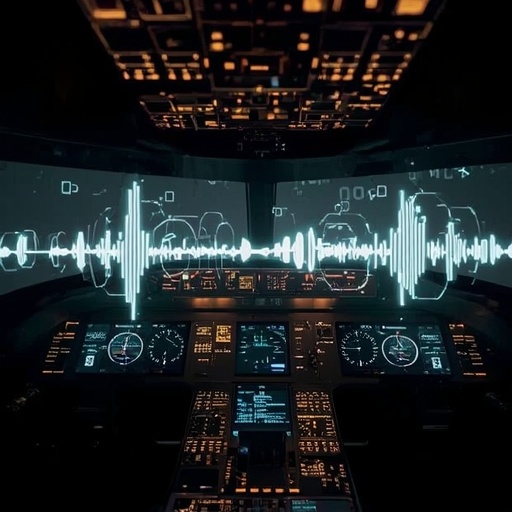
In an age defined by relentless technological evolution, artificial intelligence has entered a territory that borders on the extraordinary — and the unsettling. Recent developments have demonstrated that AI is now sophisticated enough to analyze and reconstruct the distinct voices of individuals using only cockpit audio spectrograms. This means that, with the help of advanced algorithms trained to interpret the complex visual representations of sound frequencies, researchers have been able to digitally recreate the voices of pilots who are no longer alive. Such innovation, while breathtaking in its scientific precision and potential utility, simultaneously provokes a wide range of ethical, emotional, and regulatory questions.
The National Transportation Safety Board (NTSB), which plays a key role in maintaining extensive archives of cockpit recordings for investigative purposes, encountered an unexpected consequence of this breakthrough. Upon learning that AI developers had begun using publicly accessible spectrogram data to reproduce the voices of deceased aviators, the agency made the decision to temporarily suspend public access to its audio databases. This action was not taken lightly; rather, it underscores a profound moment of reflection within the technological and investigative communities alike. It reveals the pressing need to reassess how sensitive data, even when anonymized or technically stripped of recognizable identity markers, might still carry traces of humanity that demand respect and careful stewardship.
From one perspective, this technological leap marks an astonishing advance in forensic and analytical capability. Imagine a future in which audio reconstruction allows accident investigators to better understand a pilot’s final communications or discern subtle vocal stress indicators that could illuminate the causes of complex cockpit incidents. Such applications could deepen our understanding of human factors in aviation safety, leading to improved training, safer systems, and potentially life-saving policy interventions. However, this very promise exists in tension with a profound philosophical question: at what point does scientific innovation overstep the boundaries of ethical consent and human dignity? The voice is one of the most intimate expressions of identity. To reproduce it artificially — especially posthumously, without explicit permission — invites deep discomfort for families, professionals, and ethicists who view such use as a digital resurrection that challenges the natural finality of life.
The NTSB’s reaction exemplifies a broader societal crossroads where the pace of technological progress consistently outstrips the frameworks designed to manage its implications. The pause in data access serves as a tangible reminder that institutions must now anticipate the broader cultural and moral consequences of data sharing in an AI-driven world. It also highlights a necessary shift in how transparency and privacy are balanced. Even data released for legitimate educational or investigative purposes can be retrofitted by modern machine-learning models in ways that were inconceivable just a decade ago. Thus, regulators, researchers, and technologists must engage in collaborative dialogue — one that unites ethical reasoning, legislative oversight, and technical literacy — to ensure that innovation proceeds with measured responsibility.
In a symbolic sense, these AI-generated voices echo more than the sound patterns of the past; they mirror our collective struggle to define what it means to be human in an increasingly digital age. Artificial intelligence offers extraordinary capacities for retrieval, reconstruction, and reinterpretation, yet it also confronts us with the moral requirement to acknowledge that every dataset, every algorithmic output, ultimately traces back to lived human experience. When technology crosses into spaces once reserved for memory and mourning, it compels society to decide whether the line between honoring and exploiting human remnants has been irreversibly blurred.
The story of the NTSB’s temporary data suspension is not merely a technical footnote — it reflects a foundational debate about the relationship between innovation and integrity. As AI continues to expand its influence in creative, investigative, and memorial contexts, it is crucial that we treat every algorithmic achievement not just as a triumph of human ingenuity, but also as a reminder of our ongoing ethical obligations. In this case, the recreated voices of lost pilots stand as a powerful metaphor: they speak to the boundless possibilities of machine learning, while also reminding us that the soul of progress must always be anchored in respect — for privacy, for consent, and for the memory of those whose data has taught the machines to speak once more.
Sourse: https://techcrunch.com/2026/05/22/ai-is-being-used-to-resurrect-the-voices-of-dead-pilots/