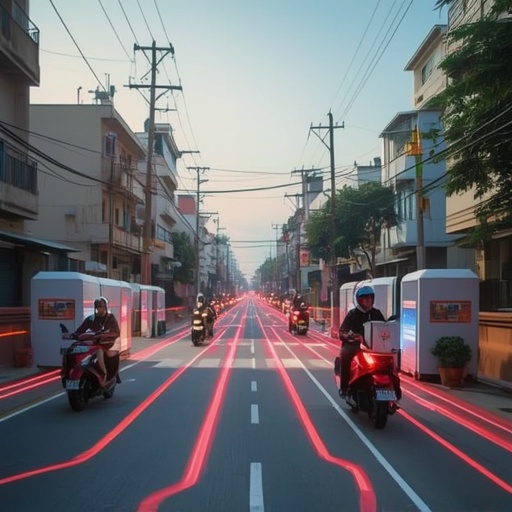
Across India, the idea of convenience in daily life is being completely reimagined by the growing phenomenon of rapid grocery delivery. What was once an extraordinary concept—receiving essential household items almost instantaneously—is now becoming an everyday expectation. In metropolitan cities as well as expanding suburban centers, the time it takes for fresh milk to arrive at one’s doorstep can now be shorter than the few minutes required to brew a cup of coffee. This impressive acceleration of service is not the result of chance but of deliberate innovation and strategic infrastructural design.
At the heart of this transformation lies the emergence of micro-warehouses, compact yet remarkably efficient distribution hubs strategically positioned close to residential areas. Unlike the large and distant fulfillment centers traditionally used in e-commerce, these miniature storage facilities minimize both distance and delivery time, enabling couriers to complete their routes with extraordinary speed. Each micro-warehouse is equipped with real-time inventory management systems and optimized route algorithms, ensuring that every order, no matter how small, is processed and dispatched within minutes.
Major players such as Amazon, together with an energetic ecosystem of Indian startups, are investing heavily in refining this model. Their goal extends beyond simply satisfying the modern consumer’s desire for immediacy; they are actively redefining the logistics architecture of retail in one of the world’s most dynamic markets. The quick-commerce approach illustrates how localized supply chains can operate with both precision and scalability—melding digital technology, data analytics, and last-mile delivery strategies into a seamless mode of operation.
The cultural and economic implications of this shift are profound. For consumers, the promise of instant access to fresh produce, groceries, and everyday essentials alters both shopping habits and expectations of what convenience really means. For businesses, it signifies an entirely new competitive landscape, one in which the ability to fulfill orders within minutes can determine market leadership. Moreover, India’s success in implementing these ultra-fast delivery systems offers valuable insights to global retailers seeking to enhance operational efficiency and customer satisfaction.
Ultimately, India’s quick-commerce revolution represents far more than a technological upgrade to grocery shopping—it is a test case in how innovation, scale, and consumer behavior can converge to reshape global retail logistics. As the industry continues to evolve, this model of micro-warehouse-driven efficiency could become the blueprint for the future of rapid, responsive commerce around the world.
Sourse: https://www.wsj.com/business/logistics/in-india-you-can-get-milk-delivered-faster-than-it-takes-to-make-coffee-aa211a54?mod=pls_whats_news_us_business_f