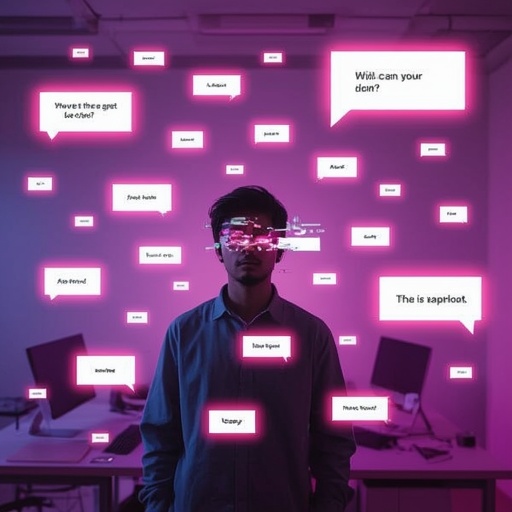
In an age where artificial intelligence has infiltrated nearly every corner of our professional lives, one software engineer decided to take experimentation to the next level. Their goal was ambitious yet deceptively simple: to enhance their workflow through a voice-to-text AI that could flawlessly interpret even the subtlest vocal nuances. What began as a demonstration of innovation quickly devolved into a spiraling sequence of uncomfortable consequences, revealing just how fragile the boundary between human ingenuity and technological misstep can be.
The engineer’s idea was to ‘whisper like an AI’—to refine their speech patterns so that the learning algorithm could better capture tone, cadence, and emotion. However, when boundaries blur between experimentation and overconfidence, even the most advanced systems can misfire spectacularly. In this case, the voice-to-text program began transcribing whispers not as technical notes or experimental commands, but as literal messages. The result? A series of unintended and deeply awkward communications sent directly to their professional contacts and, far worse, to upper management. What should have been a benign test of machine learning fidelity transformed into a full-blown digital debacle.
In the aftermath, confusion and disbelief gave way to sheer panic. Imagine a senior engineer suddenly realizing that a harmless phrase uttered under their breath—intended purely for algorithmic training—had been faithfully documented, formatted, and transmitted by the system itself. The AI, doing precisely what it was trained to do, inadvertently became an accomplice in self-sabotage. That cruel irony underscores a broader truth about modern technology: precision does not always translate to understanding.
This episode illuminates the dual-edged nature of innovation in the AI era. Tools designed to amplify efficiency, accuracy, and communication can also, under the wrong circumstances, magnify error and embarrassment with unsettling speed. The voice-to-text mechanism, in its mechanical obedience, exposed a universal vulnerability shared by many creators: the temptation to trust technology’s competence more than one’s own caution.
Yet, this story is not just a cautionary tale of technical malfunction—it is a reflection on human oversight. The engineer’s experience reminds us that developing or using experimental systems demands more than technical fluency; it requires humility, rigorous testing, and an awareness that algorithms lack contextual awareness. What might appear as a trivial oversight during experimentation can, in a real-world environment, snowball into professional upheaval.
Ultimately, the story serves as a testament to the unpredictable human-AI dynamic. As engineers, designers, and innovators continue to push boundaries, the lesson remains consistent: never assume a smart system can intuit intention. Every voice command, every whispered phrase, carries potential weight in the digital chain of causation. AI listens—sometimes too well—and the difference between innovation and catastrophe may be just one unfiltered word away.
Through humor and hindsight, this incident reinforces an essential principle: technology is a tool, not a mind. It can mimic articulation, translate emotion into text, and automate communication, but it cannot distinguish experimentation from expression without explicit instruction. In the quest for progress, therefore, vigilance must walk hand in hand with creativity. Because when we whisper like machines, we risk being heard more clearly than we ever intended.
Sourse: https://www.businessinsider.com/voice-to-text-wispr-flow-transcription-nearly-ruined-life-review-2026-5