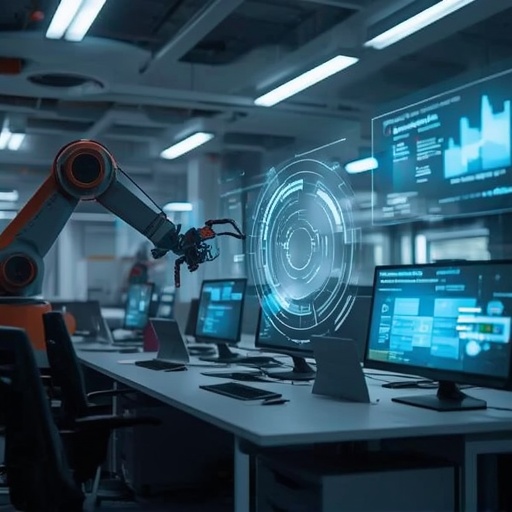
Recent research has unveiled a startling consensus among global business leaders — an extraordinary ninety-nine percent of CEOs anticipate that artificial intelligence will directly trigger significant workforce reductions within the next two years. This statistic indicates not merely a passing trend but a fundamental transformation in how organizations structure, allocate, and value human labor in an increasingly automated economy. As machine learning systems, generative algorithms, and autonomous platforms mature, executives find themselves walking a fine line between seizing unprecedented technological efficiency and managing the profound social consequences of displacement.
The enthusiasm surrounding AI adoption stems from its undeniable advantages: precision, speed, scalability, and the potential to revolutionize productivity across virtually every sector. From manufacturing and financial analysis to healthcare diagnostics and creative industries, automation offers opportunities to eliminate repetitive tasks, reduce operational costs, and unlock new strategic horizons. Yet below this optimistic surface lies an unsettling tension — the concern that the very innovations designed to enhance human capability may paradoxically erode the livelihoods they were meant to empower.
This delicate balance between progress and preservation has forced leadership teams to confront questions that extend far beyond technical implementation. The rise of AI is not simply an engineering milestone; it represents a profound redefinition of work itself. What does ‘value’ mean in an era where algorithms outperform human reasoning in data-driven decisions? How can businesses sustain morale, culture, and purpose when the human role within the enterprise becomes increasingly abstract?
Visionary organizations are beginning to frame this evolution not as a wholesale replacement of people with machines, but as an opportunity to reshape collaboration — where technology amplifies human insight rather than extinguishes it. Reskilling programs, ethical frameworks, and hybrid employment models are becoming key mechanisms for mitigating disruption. Nonetheless, the overwhelming expectation of AI-related layoffs underscores how unevenly this transition may unfold. Some sectors will flourish through augmentation, while others may experience rapid contraction unless deliberate social and economic safeguards are implemented.
In essence, the conversation about automation can no longer be confined to efficiency metrics or shareholder outcomes. It is a deeply human challenge that tests leadership vision, empathy, and adaptability. The next few years will determine whether the fusion of human creativity and artificial intelligence results in a more enlightened, cooperative workplace — or whether it accelerates division and anxiety within a rapidly changing global economy. As this technological revolution advances, executives, policymakers, and employees alike must redefine what it truly means to work, to contribute, and to coexist alongside machines in the evolving fabric of modern life.
Sourse: https://gizmodo.com/99-of-ceos-expect-ai-driven-layoffs-in-the-next-two-years-2000762994